
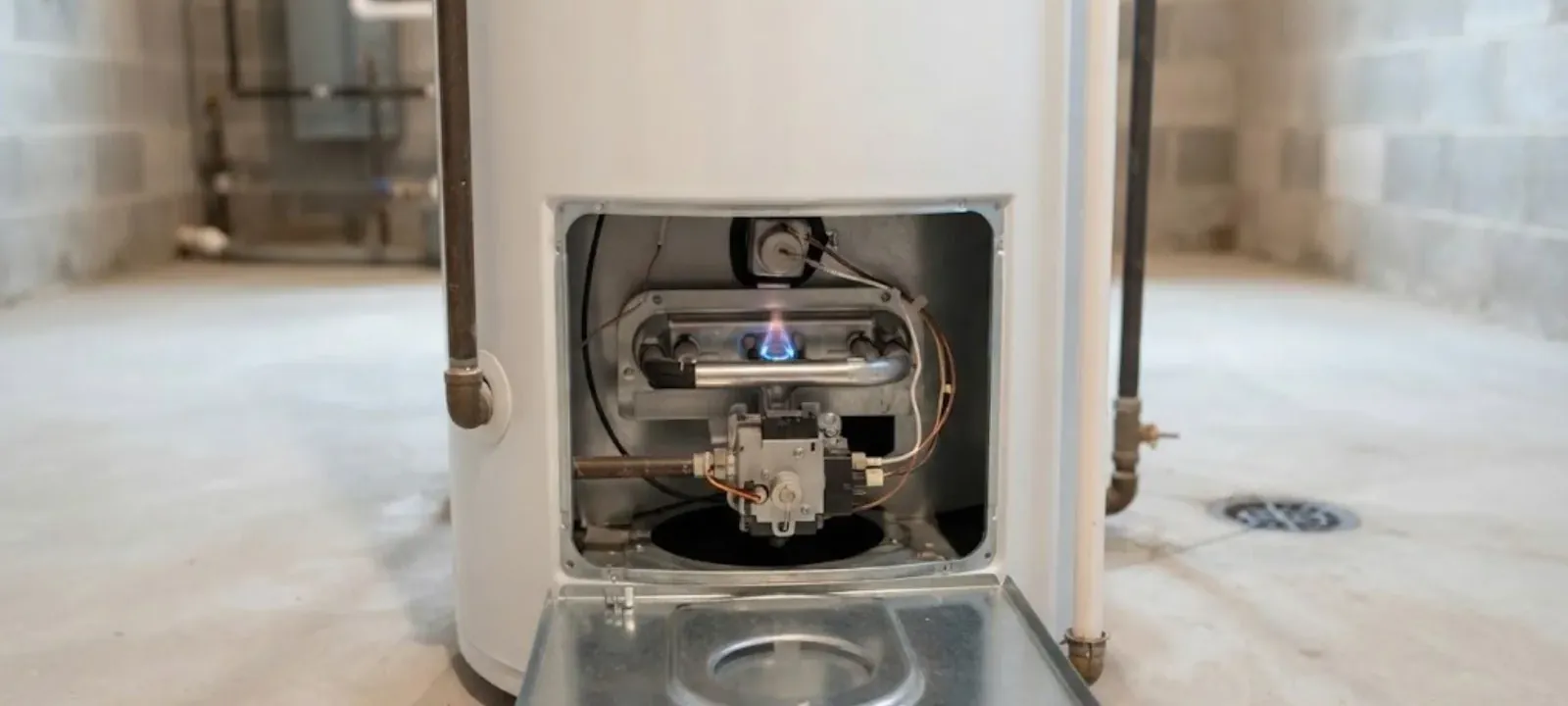
Water on the floor around the heater, or showers gone cold, is worth a call tonight and not next week. 24/7 emergency dispatch is open for Pelham homes. While you wait, close the cold water valve on top of the heater, turn the gas control to pilot or off, or flip the breaker for an electric unit if you can reach the panel from dry footing. Keep everyone out of standing water near the tank.
Water heater repair means finding which part of the heater has failed and fixing that part, such as a thermostat, heating element, igniter, relief valve or fitting. A licensed plumber can tell you when the tank itself is the problem and a repair would only postpone the replacement.
Water around the tank: what to do first
Look at where the water is coming from before you touch anything. A wet floor can come from the tank, from a fitting on top, from the relief valve discharge pipe, or from a supply line that only looks like it belongs to the heater. The source decides whether this is a quick repair or a failed tank.
Stop the refill
Turn the cold water inlet valve on top of the heater clockwise until it stops. If it will not move, shut the main water valve for the house.
Cut the fuel or power
Set a gas control knob to off or pilot. For an electric heater, switch off its breaker only if you can reach the panel from dry footing, so the elements are never energized in a drained tank.
Find the wet spot
Dry the top of the tank with a towel and watch. Drips at the pipe connections point to a fitting. Water seeping from the bottom of the jacket points to the tank. Do not touch the discharge pipe or the relief valve while it is running, because the water can be scalding.
Protect the area
Move boxes and stored items off the floor and put a bucket under any active drip. If there is standing water near outlets, appliances or the panel, keep out and call the 24/7 line.
If you smell gas
A gas smell near the heater is not a repair question. Leave the building, do not flip switches, and call your gas utility or 911 from outside. Call us after the utility has cleared the house.
When a water heater problem becomes an emergency
A leak that keeps running is an emergency because the tank holds dozens of gallons and the supply line keeps feeding it. Water that reaches drywall, insulation or a finished floor does more damage every hour. If you cannot stop the flow with the inlet valve, call right away, even at 2 a.m. or on a Sunday.
No hot water with no leak is usually less urgent, and same-day appointments when available can cover it. A scorched smell, a rumbling like boiling, or a relief valve that keeps spitting moves it up the list. After-hours and weekend calls reach the same dispatch line. If you are unsure which case you have, call and describe the symptoms.
If the water seems to come from pipes in a wall or under the slab instead of the heater, that is a different job, and leak detection is the page to read. Do not rely on a repair visit to the heater to find it.
No hot water: what the plumber checks, by fuel type
Cold water from the hot tap has a short list of causes, and the fuel type narrows it fast. The plumber starts with the cheap checks. Is there gas or power reaching the unit, is the thermostat set where it should be, and does the water go cold only when two fixtures run at once?
Gas tank heaters
- A pilot that will not stay lit often points to a worn thermocouple, which is a small safety sensor that shuts the gas if the flame disappears.
- Newer units with electronic ignition can fail at the igniter or flame sensor, and the control board may blink a code.
- A dirty burner chamber or blocked vent can make a flame lift, flicker or shut off.
- A gas control valve that does not open is a bigger repair, and often a reason to talk about replacement.
Electric tank heaters
- Most electric tanks have two heating elements, upper and lower. If the upper one fails you get no hot water. If only the lower fails you get a short supply that runs out fast.
- A tripped reset button on the upper thermostat usually means something underneath caused it, so pressing it again without testing is a gamble.
- A tested element or thermostat is cheap compared with the tank, so these are the repairs most worth making.
Some hybrid heat pump units can fall back to their electric elements if the heat pump side faults, so lukewarm water does not always mean the whole unit is dead. Check the manual or ask the plumber which side has failed. For a switch to a different type of heater, see tankless water heater options.
Repair or retire the tank: a decision table
The age of the tank matters, but the symptom matters more. A part failure on a tank in good condition is worth fixing. Corrosion in the steel shell is not, because nothing inside a rusted tank can be repaired. If the answer is replacement, the water heater replacement page covers sizing and the day of the swap.
To find the tank's age, look at the serial number on the rating plate. Makers usually encode the build date in it in their own way, so read the number to the plumber and ask them to decode it.
| Symptom | Tank age and condition | Usual path |
|---|---|---|
| No hot water, gas unit, pilot out | Any age, no rust at the base | Repair the thermocouple or igniter |
| No hot water, electric, breaker holds | Any age | Test and swap the element or thermostat |
| Relief valve drips or discharges | Any age | Check pressure and valve, repair or add an expansion tank |
| Rumbling, popping or hissing | Older tank with sediment | Flush if it drains clear, replace if it has gone solid |
| Water seeping from the base or jacket | Any age | Replacement, the steel shell has failed |
| Rusty hot water only | Older tank, anode likely spent | Inspect the anode, replace the tank if the shell is corroded |
T&P valves, sediment and anode rods
The temperature and pressure relief valve is the safety valve on the side or top of the tank. It opens if heat or pressure climbs too high, and it should drain through a pipe toward the floor. If water drips from that pipe, the valve may be worn, the household water pressure may be high, or a closed system may need an expansion tank.
Sediment settles at the bottom of a tank and insulates the water from the burner or lower element. The result is noise, longer heat-up times and a hot spot that stresses the steel. Flushing the tank clears loose sediment, but hardened scale may need a replacement.
The anode rod hangs inside the tank and corrodes on purpose so the steel does not. Once it is consumed, the shell becomes the next thing to corrode. A plumber can pull the rod, see how much is left and tell you whether a new one is worth fitting.
Relief valve, venting and gas connection work falls under the plumbing code. Alabama's Plumbers and Gas Fitters Examining Board Rule 720-X-1-.02 names the 2021 International Residential Code for residential work and the 2021 International Plumbing Code (IPC) for commercial work, so check the board for the current edition.
What Pelham's water supply means for your tank
According to Pelham Water Works' 2024 annual water quality report, the city draws from five wells and also buys treated water from Shelby County Water Services, which comes from the Coosa River and Lay Lake. The same report lists a wide range for hardness. That mix means two streets in Pelham may not get the same water, and scale can build in one tank faster than in another.
So treat sediment as something you check, not something you assume. Follow the heater maker's flush schedule, and tell the plumber the hardness range from the utility's report so they can say whether to check the anode sooner.
Your water bill shows which utility serves your address, so check it before you plan a flush schedule. If you are in Alabaster, the Alabaster plumbers page covers service there, and that city's water comes from a different utility.
What decides the price of a water heater repair
Repair cost depends on the part, the fuel type and how hard the unit is to reach. We give you a clear price before work starts, so you can decide on the spot whether to fix or replace.
Ask your insurer what your policy covers, and keep photos and the plumber's invoice. Call for a real number on your unit, and the price is agreed before work starts.
Leaking or cold right now?
24/7 emergency dispatch is open, and same-day appointments when available can cover a heater that can wait. Call the dispatch line and say what you see.
Water heater repair questions
Yes. 24/7 emergency dispatch covers nights, weekends and holidays. Close the cold inlet valve first, then call.
A heater that has gone cold with no water on the floor can often wait for a same-day appointment when available.
Top leaks usually come from the inlet or outlet connections, the relief valve or a corroded nipple fitting. These are repairable because the tank itself is dry.
Leaks from the bottom of the jacket are different. That is water coming through the tank wall.
It can be. The valve is doing its job if pressure or temperature is too high, so a plumber should check the incoming pressure and whether an expansion tank is needed.
Do not cap or plug the discharge pipe. That removes the only protection against an over-pressurized tank.
Sometimes. If the water from the drain valve runs mostly clear after a few gallons, the sediment is loose and a flush helps.
If the drain clogs or only trickles out, the sediment has hardened, and the tank is usually near the end of its life.
Often a small repair. A plumber checks the thermocouple and pilot assembly first, because a worn one is a small repair on most gas tanks.
If the vent is blocked or the gas control valve is failing, the repair is bigger and replacement may make sense. The vent is checked early, since a blocked one can make the flame go out.
Many repairs are a single visit once the failed part is identified. The plumber will say whether a part has to be ordered, and the price is agreed before work starts.