
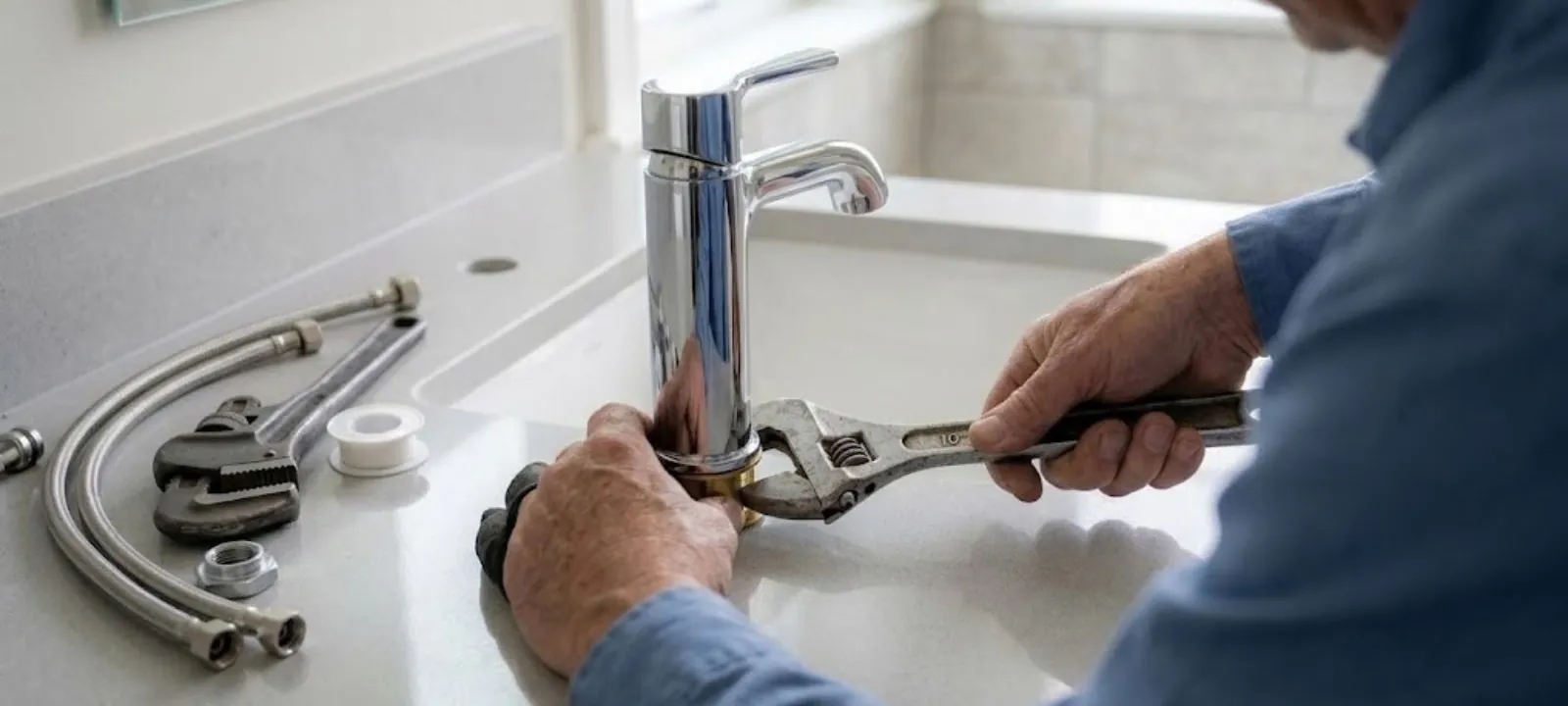
A faucet or shutoff valve that will not stop the water is an urgent problem, and our 24/7 emergency dispatch sends licensed plumbers for faucet and sink repair in Pelham, AL. Faucet repair means fixing or replacing the cartridge, seals, valve, or supply parts that control the water at a sink, tub, or shower. Close the small valve under the sink clockwise, and if it spins freely or leaks, shut the main water valve and call the dispatch line.
Put a bucket under any spray and a towel around the cabinet floor. The house main is usually near the water heater, in a basement, crawlspace or utility closet, or where the line enters the house. Find it before you need it, and if you cannot, the dispatcher will talk you through finding it. Same-day appointments when available, and nights and weekends go to the same 24/7 emergency dispatch.
Water in a vanity can reach outlets and wiring. If there is standing water near outlets or an appliance, keep out and call the 24/7 line, and switch off power to the area at the breaker only if you can reach it from dry footing.
Emergency valve failures: when the water will not shut off
Many faucet emergencies come from the valve or hose, not the faucet. The angle stop under it may have seized, a supply hose may have split, or the handle may have snapped off the stem. In each case you need to stop the water somewhere upstream, and the main valve is the backup.
Turning a stop that has not moved in years can crack its packing and start a leak that never existed before. Turn it gently, and if it fights you, leave it and use the main. A plumber can replace a stop with a quarter-turn valve that is far easier to close in a hurry.
A tub or shower valve is harder. The shutoff may be behind a wall, so the main is your only stop until the repair. If the water is leaking inside the wall, ceiling stains below are a warning, and leak detection can trace where it is going.
Which faucet do you have?
Four designs cover most homes. A compression faucet has separate hot and cold handles that screw down onto a rubber washer. A cartridge faucet has a plastic or brass cylinder that slides and turns. A ball faucet, common in kitchens, has a rounded cap and a single lever. A ceramic disc faucet uses two polished discs inside a canister.
A worn washer or O-ring is a small part in a compression faucet, but a cartridge is sold to fit one model and matching it matters. Ball faucets have many small springs and seats. Ceramic discs rarely wear out but crack if debris gets in. Tell the dispatcher the make if you can read it on the spout or handle.
Drips at the spout, handle, or base
Where the water shows up tells you the part. A steady drip from the spout means a worn seat, washer, or cartridge. Water around the handle means a worn O-ring or a loose packing nut. Water pooling at the base of a kitchen faucet usually means the body gaskets have failed or the faucet is loose on the sink.
The aerator is the small screen at the tip of the spout, and it catches grit and mineral flakes. The city's 2024 water report lists a wide hardness range and the supply comes from more than one source, so the water you get may differ from a neighbor's. A clogged aerator that sprays sideways or runs weak is easy to unscrew and soak. If it clogs again within weeks, tell the plumber.
| Situation | Repair usually works | Replace usually makes sense |
|---|---|---|
| Drip from the spout | Cartridge, washer, or seat is worn but the body is clean | Body is pitted or the finish is flaking |
| Leak at the handle | O-ring or packing nut | Stem is stripped or the handle will not hold |
| Loose or leaking base | Tighten the mounting nut and replace gaskets | Cracked base or corroded deck mount |
| Low flow | Clean aerator or cartridge | Internal passages are scaled shut |
Under the sink: stops and supply lines
The two braided hoses under a faucet are supply lines, and they fail more often than the faucet does. Look for beads of water at the nut, a bulge in the braid, or rust bleeding through the sleeve. A split line can drop a lot of water into a cabinet quickly. Replacing them when a new faucet goes in is a common practice.
The angle stops they connect to are worth testing once a year. Close one, then open it. If it weeps around the stem or will not close fully, it is due. Replacing a stop requires closing the main and opening the line, so it is a good addition when the cabinet is already torn open for another repair, such as a garbage disposal that sits beside it.
Tub spouts, shower valves, and showerheads
A tub spout that sprays from the diverter during a shower has a worn diverter, a cheap swap. A showerhead that drips overnight points to a cartridge or seat in the shower valve behind the wall. A handle that turns but does little means the cartridge has slipped or broken.
Shower valve work often means opening the wall from the other side or through an access panel, so ask the plumber about patching before the visit. A slow drain in the same tub is a separate problem, usually hair, and drain cleaning clears it.
What to do before you start, and when to call a plumber
Safety checklist for a faucet problem
- Close the angle stop under the sink, or the main water valve if the stop will not turn
- Keep out of the area if water is standing near outlets, appliances, or a panel, and call the 24/7 line
- Switch off power to the area at the breaker only if you can reach it from dry footing
- Do not force a stiff or frozen valve, because it can crack and make the leak worse
- Call a plumber if water is inside a wall, the main will not close, or a repair has failed twice
Faucet and supply work falls under plumbing code, and Alabama's Plumbers and Gas Fitters Examining Board rule 720-X-1-.02 names the 2021 International Residential Code for residential plumbing. Check the board for the current edition, and verify any plumber in its Licensee Search at pgfb.alabama.gov.
What affects the price of a faucet repair
A cartridge swap and a shower valve replacement are very different jobs, so the cause sets the price.
Ask your insurer what your policy covers and keep photos and the plumber's invoice. Call us and you get a clear price before work starts.
The city's bill policy and dripping faucets
Pelham Water Works excludes dripping faucets and hose bibs from its leak adjustment policy. That is the policy at time of writing, so confirm current terms with Pelham Water Works at (205) 620-6420, and see the high water bill guide.
Treat a drip as a repair to schedule rather than a bill you can dispute later. We serve Pelham and nearby towns.
Faucet or valve that will not stop?
Close the main valve, call the dispatch line, and describe where the water is coming from.
Faucet and sink repair, answered
Yes. Dispatch is 24/7 and a licensed plumber can be sent overnight, on weekends, and on holidays for a valve that will not shut, a split supply line, or a spraying faucet.
Same-day appointments when available. Close the main water valve first so the damage stops while you wait.
Tightening only squeezes a worn seal. If the washer, seat, or cartridge is damaged, more force makes it wear faster.
Stop turning the handle hard and have the part replaced. A mineral-scarred seat can also keep a new washer from sealing.
It is worth repairing when the body is sound and the part is easy to match. If the finish is flaking, the body is pitted, or the model is discontinued, replacement is usually the better choice.
A simple rule: if the repair costs close to the price of a new faucet, replace it. A plumber can tell you which it is after a look at the stem and the seat.
Closing the main and swapping an angle stop is a basic job for some homeowners, but a stop that leaks after the swap can flood a cabinet. Old copper and corroded fittings are easy to crack.
If the stop is frozen or the pipe is stiff, call a plumber.
Grit or mineral flakes in the aerator usually block part of the flow. Unscrew the tip, soak it in vinegar, and rinse.
If it returns quickly or the pressure stays low, the problem may be inside the cartridge or the supply line.