
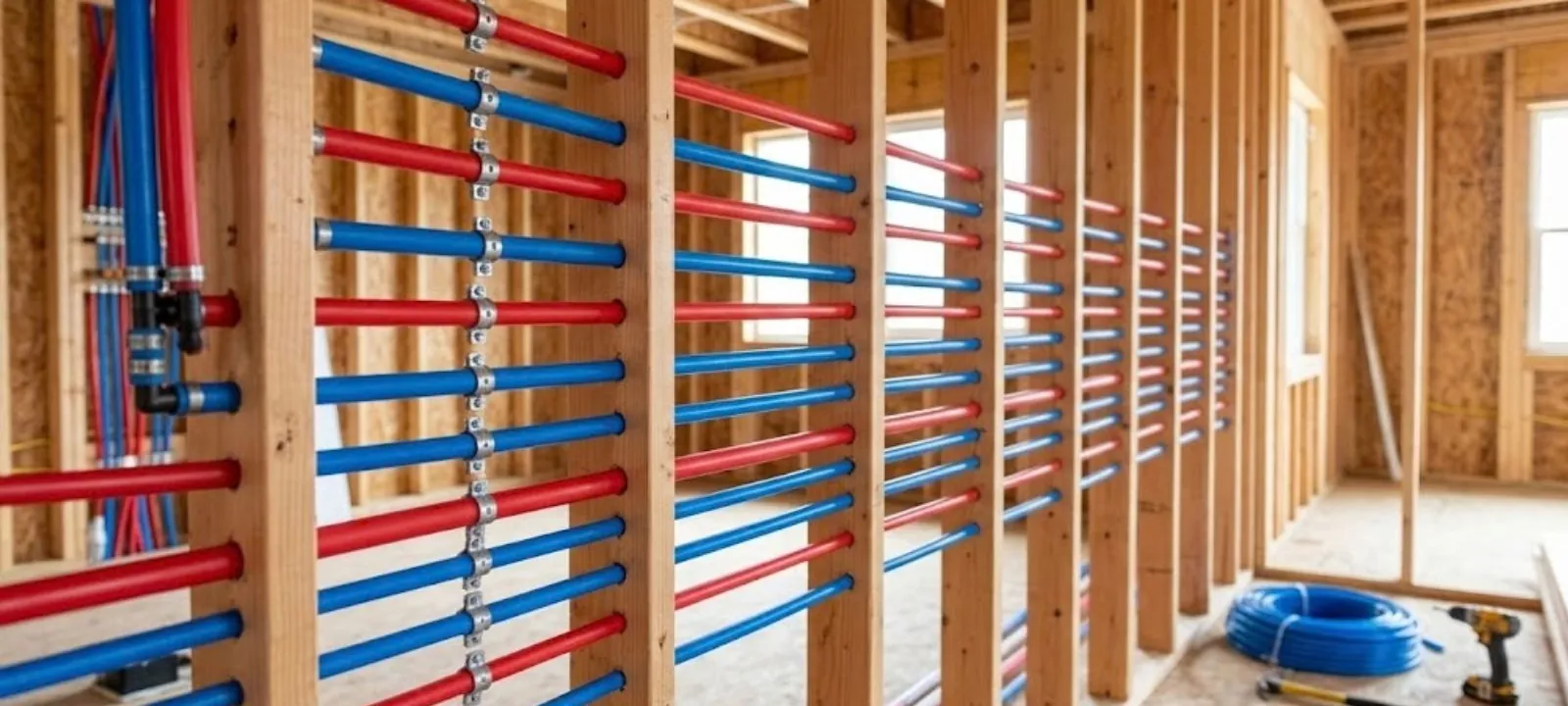
Repiping in Pelham, AL means replacing the water supply pipes inside a home with new pipe, usually when repairs stop holding. It is a planned job, not a same-hour fix. If a pipe is bursting right now, shut the main water valve and see burst pipe repair. If your problem is a slow pattern of rust, weak flow, and returning leaks, this page is for you.
Rusty water, weak flow, and leaks that keep coming back
Brown or orange water after sitting overnight can come from corroding steel pipe, and it clears after a minute of running. If it does that at every faucet, the source may be the pipe run and not one fixture.
Pipes that are lined with scale or rust have a narrower inside, so a shower fades when someone starts the dishwasher. If only one faucet is weak, check its aerator first. If every fixture is weak and the meter is fine, the supply pipes are suspect.
A single pinhole leak is a repair. Several in one year, on different sections, mean the pipe wall may be thinning everywhere. Look also for green crust on copper joints, a pipe that sweats heavily, and stains on ceilings below a bathroom. One failure in a fitting is not the same as three in straight pipe, and the more of these signs you see together, the more repiping becomes the sensible conversation.
Galvanized steel pipe is the usual source of brown water and falling pressure in older homes. Polybutylene, a gray plastic used in some homes for a period, is another material plumbers look for when deciding whether to repipe.
Repair the leak or replace the run?
A repair is right when the pipe around the leak is sound. A plumber cuts out the bad spot and joins in new pipe with a coupling. This works well for a damaged fitting or a single hit from a nail or a shovel. It does not work when the pipe on both sides crumbles at the cut.
Replacement is right when the pipe fails again after repair, or when a section is so corroded that it will not hold a new joint. Before deciding, leak detection can show whether you have one hidden leak or a general decline, since a plumber may use listening gear and pressure testing.
Also separate the house from the yard. The line from the meter to the house is a different job from the pipes inside, and water service line repair covers it. Confirm where the utility's side ends and yours begins with Pelham Water Works at (205) 620-6420. A weak flow that began at the meter can mean the service line, so repiping the walls would not help.
Copper, PEX, or CPVC
Three materials cover most repipes today. Copper is rigid, durable, and takes a long time to wear out, but it is slower to install and sensitive to certain water chemistry. PEX is a flexible plastic tubing that bends around corners, which means fewer fittings and less wall opening. CPVC is a rigid plastic that is easy to cut and join.
According to Pelham Water Works' 2024 annual water quality report, the utility's water is non-corrosive with a pH of 7.3. That is the utility's report on its own water, not a promise about any home's plumbing, so a plumber still looks at the pipes that are actually in your walls. The water source mix means what you get may differ from a neighbor.
| Material | Strengths | Trade-offs |
|---|---|---|
| Copper | Long life, handles heat, long track record in homes | Rigid, slower to install, more joints |
| PEX | Flexible, fewer fittings, less drywall opened | Must be shielded from sunlight, so it needs protection where it is exposed |
| CPVC | Rigid plastic, easier to cut and join | Can turn brittle with age and heat, needs support |
Plumbing code governs this work. Alabama's Plumbers and Gas Fitters Examining Board rule 720-X-1-.02 names the 2021 International Residential Code for residential plumbing, so check the board for the current edition.
How a repipe is staged
A whole-house repipe is planned to keep the house usable, but the schedule depends on the layout and the material. Ask the plumber for a written plan before work starts: which sections will be off, for how long, and when water is restored each day.
Walk the house
The plumber maps every fixture, the main, and the water heater, and finds where access can be gained.
Open access points
Typically, small openings go in closets, attics, and crawlspaces to limit wall damage.
Run the new pipe
Typically, new lines are pulled and connected branch by branch.
Pressure test
Before anything is closed, the system is pressurized and checked for drips.
Reconnect and flush
Fixtures are reattached and the lines are flushed so debris does not reach the aerators.
Drywall, patching, and living in the house
Repiping touches walls. How much depends on the layout and the material. A flexible tubing run through attic and crawlspace needs fewer holes than rigid pipe in finished walls. Ask the plumber where holes will go, what will be patched, and who does the paint.
Move furniture out of bathrooms and kitchens, empty closets that will be opened, and plan for dust. Pets and children should stay out of work areas. Keep bottled water on hand in case sections are off longer than expected.
Whole house or one branch
A partial repipe replaces one failing section, such as a bathroom branch or a kitchen run. It is the right call when the rest of the pipe tests clean. A whole-house repipe makes sense when the problems are spread out or when you are already opening walls for a remodel.
If you plan to add a bathroom or move a kitchen, combine it with plumbing installation so the walls are opened once. Permit rules vary by job, so ask the Pelham Building Department at 205.620.6495, which inspects residential construction inside city limits.
What drives the cost of a repipe
Every house is different, so a price is set after the plumber has seen it.
Ask your insurer what your policy covers and keep photos and the plumber's invoice. Call us to schedule a visit and get a clear price before work starts.
What is actually in your walls
Pelham's homes range from older houses to new builds, and we do not assume the age or pipe type of any address. The only reliable way to know is to look at the pipe where it enters at the water heater, under sinks, and in the crawlspace.
Tell the dispatcher what you see, such as the color of the pipe, any rust, or any plastic. We serve Pelham and nearby towns, including Helena, and same-day appointments when available for an assessment. Call during the day to line up a planned visit.
Questions to ask before you hire
- Is the plumber licensed? Check the board's Licensee Search at pgfb.alabama.gov
- What is the written scope of work?
- Who patches and paints the drywall?
- How will water be restored during the job?
- Will I get a written, clear price before work starts?
Ready to find out what your pipes need?
Call, describe the rust, pressure, or leaks you have seen, and set up a visit to look at the pipe itself.
Repiping questions, before you commit
Count the leaks and where they are. One leak at a fitting is a repair. Several leaks over a year in different places, along with rusty water and weak flow at every fixture, points to the pipes.
A leak detection visit and a pressure test help sort a single bad spot from a failing system.
Water that sits in steel pipe overnight can pick up rust, and the first draw may run discolored before it clears. That often points to corroding pipe inside the house, but it can also follow utility flushing or sediment in a water heater.
If it happens at every faucet at once, call Pelham Water Works at (205) 620-6420 as well.
Often yes, but it depends on the layout and the plan. Ask the plumber for a written plan covering which sections will be off, for how long, and when water is restored each day.
Expect some noise and dust, and keep bottled water on hand.
No. The report describes the utility's water, which it calls non-corrosive, based on the utility's own testing. It says nothing about the pipes in a given house.
Your own pipes may be old, scaled, or worn regardless of the report.
No. A repipe replaces pipes inside the house. The line from the meter to the house is a service line and is its own repair. Confirm the boundary with Pelham Water Works at (205) 620-6420.
A plumber can tell which section is causing the symptom before you pay for the wrong one.