
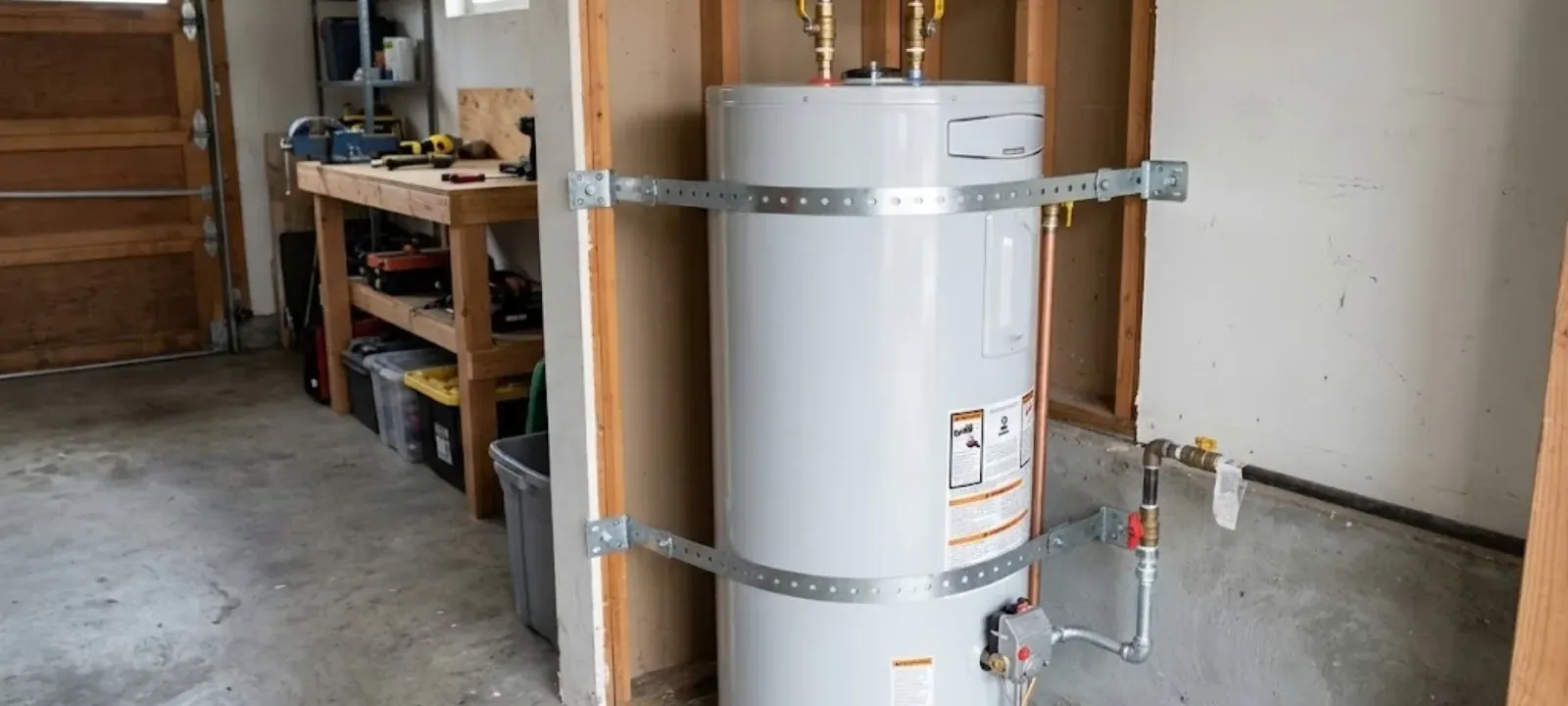
Water heater installation is the work of setting a new heater, whether it replaces an old one or goes into a new room, and connecting its water, fuel, vent and safety parts so it runs correctly. If you are planning ahead, a licensed plumber can walk through the options by phone, and same-day appointments when available can cover a first look at the space. Photos of the heater's location help on that call.
This page is for planned work. If an old tank is spilling water right now, the faster path is replacing a failed water heater, which covers shutting off water and power and what the plumber does that day.
Tank, hybrid or tankless: choosing what goes in
Each type trades up-front work against how it behaves at the tap. A standard tank is the simplest and is usually the easiest to fit in an existing closet. A hybrid pulls heat from the surrounding air, so it needs space and airflow. A tankless unit heats water as it flows, so it needs the right gas line or electrical supply and exhaust venting.
| Type | What it needs | Trade-off to weigh |
|---|---|---|
| Standard tank, gas or electric | A drain pan, relief valve pipe, shutoffs and a vent or circuit | Simple and familiar, but it holds hot water and can run out |
| Hybrid heat pump tank | Air clearance, a condensate drain and a dedicated electric circuit | Needs room and makes some noise, but suits a garage or large closet |
| Tankless, gas or electric | A suitably sized gas line or high-amp circuit, plus venting for gas | Endless hot water at a set flow rate, with more install work and scale care |
If you are leaning toward on-demand heating, read the tankless water heater page before you decide. Flow rate, simultaneous use and upkeep are where those units differ most.
Venting and gas line checks before anything is connected
A gas heater is only as safe as its exhaust path. The plumber checks that the vent is the right size and pitch, is sealed at the joints and ends at a safe point outside. Old vents from a previous heater are not always reusable. A new unit may draw differently, so a flue that worked for the old one can need a liner or replacement.
The gas line is checked for size and condition. A heater that needs more gas than the pipe can deliver will starve and shut off at the worst times. Tankless gas units need the most from the line, which is why a line upgrade is common with that type.
Gas and combustion work is regulated. Alabama's Plumbers and Gas Fitters Examining Board Rule 720-X-1-.02 names the 2021 International Residential Code for residential plumbing and gas installations, the 2021 International Plumbing Code (IPC) for commercial plumbing, and the 2021 International Fuel Gas Code for commercial gas. That is how the rule is written, so ask the board how it applies to your job and check it for the current edition.
Small parts plumbers check on a new heater
- Expansion tank. In a closed plumbing system, heated water has nowhere to expand. A small tank on the cold line takes up the pressure so the relief valve does not weep.
- Drain pan and pipe. A pan under the heater catches slow leaks, and its drain line sends them to a safe spot.
- Shutoff valves. A working cold shutoff above the heater lets any future job start without closing the whole house.
- Relief valve and discharge pipe. The pipe runs to a safe point and stays uncapped.
- Flexible connectors and dielectric fittings. New ones prevent the corrosion that forms where unlike metals meet.
These parts cost little compared with the heater, and a leaky one gets expensive quickly. Ask the plumber which of them are already in place and which are new.
Relocating the heater or hooking one up in new construction
Moving a heater from a cramped closet to a garage or utility room can make service easier and open up living space. It also means running new water lines, a new vent or circuit, and possibly a new condensate or pan drain. Each of those has its own routing questions.
In new construction the work comes in stages. The rough-in puts in supply lines, the gas stub and the vent path before walls close. The heater itself is set and tested later. If you are the homeowner or builder, ask the plumber to confirm the exact stub locations on the plans before drywall goes up.
Whole-house projects that include a heater among other fixtures fall under plumbing installation, where the plumber handles fixtures, supply and drain runs together.
Permits, codes and checking your plumber
Permit rules vary by job, so ask the Pelham Building Department at 205.620.6495 whether yours needs one. The department is at 3162 Pelham Pkwy and handles permits and inspections inside city limits. Your plumber can describe the work, and the department can tell you what applies.
You can also look up any plumber's license at the Plumbers and Gas Fitters Examining Board website, pgfb.alabama.gov, using its Licensee Search. Do that before you pay a deposit to anyone, including us. We are licensed and insured, and we will give you a clear price before work starts.
Our dispatch base is on Pelham Parkway. We serve Pelham and nearby towns in Shelby County, so call to talk through the space before scheduling. Homeowners in Alabaster can start from the Alabaster plumbers page.
What to have ready before the plumber arrives
Clear a path
Move storage away from the heater, the route to it and the area where the old unit will be carried out.
Find the shutoffs
Know where your main water valve and your gas shutoff are. Show them to the plumber at the start.
Note the old label
The rating plate is a sticker on the side of the tank. Photograph it so the plumber can read the fuel, capacity and model it was set up for.
Plan for a short outage
Hot water is off for part of the visit, so schedule laundry and showers around it.
Decide on extras
Choose in advance whether you want a new pan, valves or expansion tank, so the price you agreed holds.
What goes into a water heater installation price
A quote for a planned install should break down by what is being done. Here is what moves it.
Ask your insurer what your policy covers, since coverage varies by policy. Ask the heater's maker and your utility whether any rebate applies to the model you choose. The plumber will quote the work before it begins.
Planning a new heater?
Call to talk it through and have your old heater's label handy. You get a clear price before work starts.
Water heater installation questions
A tank swap involves gas, electric, hot water and a relief valve, and mistakes here can cause a leak, a gas problem or a scald. Gas appliances are the part most worth leaving to a licensed plumber.
If you still want to do part of the work yourself, ask the Pelham Building Department what applies at 205.620.6495.
Tankless units are compact but need a vent route if gas. Hybrid units need open air around them at the clearance the maker's instructions specify, plus a place for condensate to drain.
Photos of the current space help a plumber tell you quickly whether it fits.
It depends on whether your system is closed, which happens when there is a check valve or pressure reducing valve on the incoming line. Many homes are closed.
If your relief valve has ever dripped, or the pressure gauge reads high, mention that when you call.
Usually, yes. The main questions are whether the new spot has a vent path or circuit, a drain for the pan and enough clearance for service.
Moving it farther from fixtures also means longer waits for hot water at the tap unless a recirculating setup is planned.
Go to pgfb.alabama.gov and use the Licensee Search for individuals or businesses. The board can also be reached at (205) 945-4857.
Check before you pay a deposit, and ask whoever visits your home to show their license.
It depends on the job. A like-for-like tank swap is often a single visit, while a fuel change, vent rework, new location or an ordered unit adds time.
The plumber can give you a realistic window once those drivers are known.