
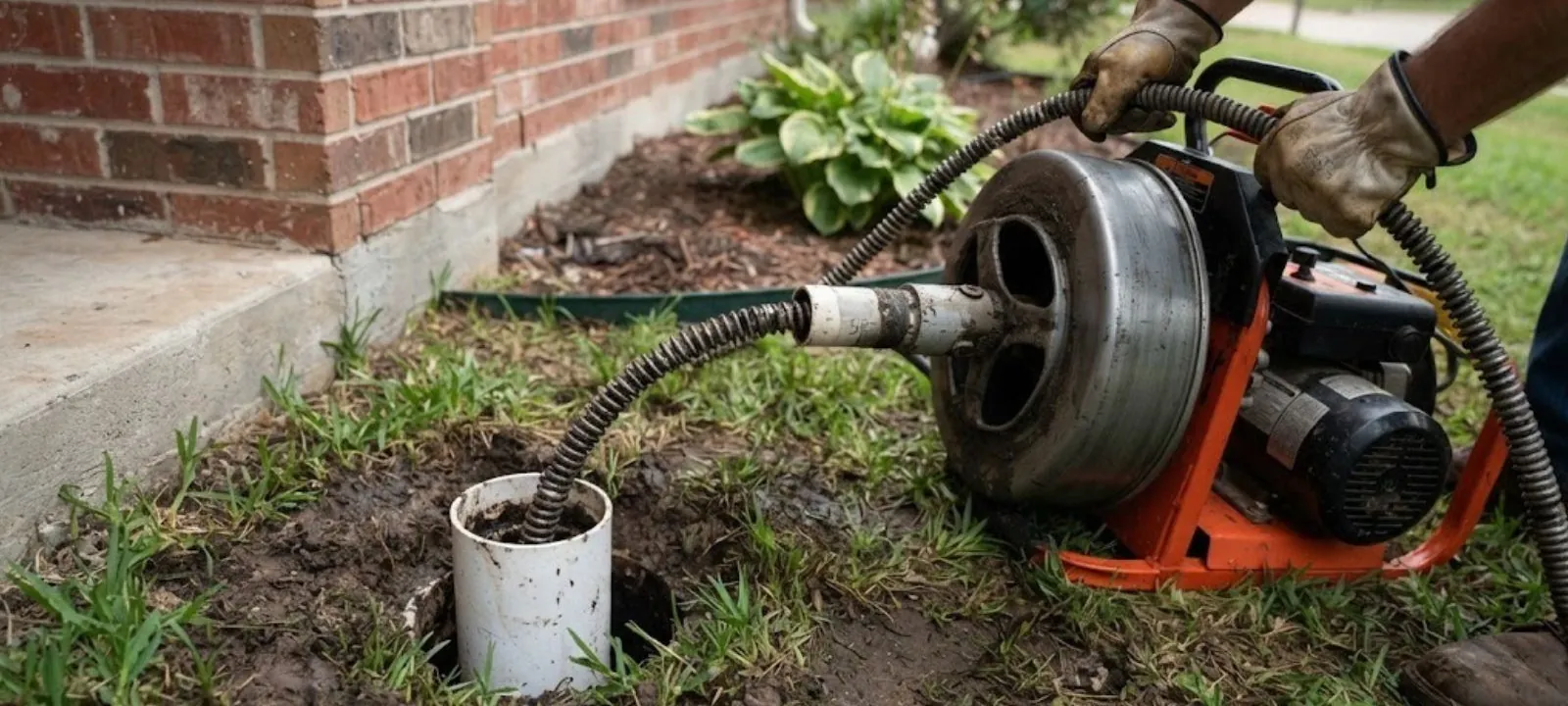
Water standing in a tub or backing out of a floor drain cannot wait for a convenient day. Drain cleaning in Pelham, AL is covered by 24/7 emergency dispatch, and it means opening a blocked line with a cable, a jetting hose or hand tools so water moves again. Until a plumber arrives, stop running water, leave the washer and dishwasher off, and skip the drain opener. Call and describe which fixtures are affected.
Is it one drain or the whole house?
Start at the lowest fixture and work up. If only the kitchen sink is slow, the trouble sits in that sink's trap or its short branch line. If the tub gurgles when the toilet flushes, or dirty water shows in a floor drain after the washer runs, the blockage is further down, in the line every fixture shares.
That split decides the tool and the bill, so give it two minutes before you call. Run the cold tap in a bathroom sink for a minute, then look at the tub and the lowest floor drain. Bubbling or movement there means the shared line is involved, and a cable down the kitchen sink will not help. That is a main line cleaning job.
Kitchen sinks, grease and the disposal
Kitchen drains clog with grease, coffee grounds, rice and starchy scraps that pack into the trap and the flat run behind the cabinet. Hot water does not carry grease away. It cools a few feet down the pipe, sticks to the wall, and each rinse adds another layer. A second hot rinse only moves the grease to the next cool stretch of pipe, where it sets again.
If the sink has a disposal, run it with the water on and listen. A hum with no spin is a jam or a motor fault, and that belongs with garbage disposal repair. A disposal that spins freely while both basins hold water means the clog sits past the tee where the disposal and dishwasher hoses join the drain. Do not run the disposal while the sink is standing full, because it cannot push water past the clog.
Dishwasher hoses tie in at that same spot. If sink water shows up in the dishwasher, or the reverse, tell the plumber. It points to the shared branch rather than the basin.
Showers, tubs and bathroom sinks
Bathroom drains rarely clog with grease. Hair wrapped in soap scum builds a mat on the strainer, the stopper arm or the first elbow, and the pipe narrows a little each week. The sign is water still around your ankles a minute after the shower stops.
A hair catcher and a monthly pull-and-rinse of the stopper stop most of it. If the stopper is out and the tub still drains slowly, a short cable can reach the overflow tee and the trap. If bubbles rise in the shower when the toilet upstairs flushes, the problem has moved to the branch line and cleaning only the tub drain will not hold.
A leaking drain line is a different fault. A stain on the ceiling under a bathroom, a damp cabinet floor or a wet joist under a tub can come from a cracked pipe, a loose slip joint or a worn trap. Clearing the clog seals none of them. A plumber can run water through the line and watch where it drips.
Cable, camera or jet: matching the tool to the clog
A hand auger reaches a trap and a few feet of branch. A drain machine carries a longer cable and spins a head that cuts soft blockages and thin roots. A camera shows what the cable keeps hitting. Washing the whole pipe wall is its own job, covered under hydro jetting.
| What you see | Usual first tool | When to step up |
|---|---|---|
| One sink or tub slow, others fine | Hand auger or short cable | If it is back within a few weeks |
| Kitchen line slows again every few months | Drain machine with a cutting head | Jetting if grease coats the wall after each cutting |
| Tub, toilet and floor drain all affected | Cable from the main line cleanout | Camera to look for a break or a low spot |
| Cable stops at the same point every time | Camera before any more cutting | A sewer camera inspection to map the fault |
| Snake broke off or an object is stuck | A retrieval tool, with a camera to guide it if needed | Repair if the pipe is cracked at that spot |
Which of these gets used depends on the visit. Ask what will be tried first and what stepping up to the next tool would add to the price.
A cable gives a clean result on soft clogs, but it can leave a ring of grease on the wall, and roots regrow. That is why a clog that returns on a schedule earns a camera next, not a longer cable.
If a camera finds a cracked or sagging pipe, the repair falls under the plumbing code. Alabama's Plumbers and Gas Fitters Examining Board Rule 720-X-1-.02 names the 2021 International Residential Code for residential plumbing and the 2021 International Plumbing Code (IPC) for commercial plumbing, so check the board for the current edition.
Washer standpipes and floor drains
A washing machine empties through a standpipe, a vertical pipe about waist high with a trap below it. Lint, softener residue and a hose pushed too deep can all slow it. If the standpipe overflows while the machine drains, the machine is outrunning a partly blocked line.
Basement and garage floor drains are the lowest opening on the house line, so they show a full main first, sometimes as a smell before any water appears. A floor drain that has been dry for months may only need a bucket of water to refill its trap. If the water you pour in does not drain, that is a clog.
Emergency drain cleaning at night and on weekends
Water climbing toward the rim of a tub or toilet, a sewage smell with water in a floor drain, or every fixture draining slowly at once all justify an after-hours call. Same-day appointments when available suit stoppages that can hold a few hours, and the emergency line stays open at night, on weekends and on holidays for the rest.
Tell the dispatcher which fixtures are affected, whether the water is clear or dirty, and where the cleanout is if you know. That lets the plumber plan cable length and cutter type before heading out. If water is already on the floor, move rugs out of it and keep children away from standing sewage. If it is near outlets, appliances or a panel, keep out and call the 24/7 line.
At the visit, the plumber locates the cleanout or the affected fixture first, then tries a cable. If the clog returns or the cable keeps stopping at one spot, a camera can show why. Whether it clears on the first trip depends on what the clog is and how reachable the line is, and the price is agreed before work starts.
No drain opener in a full drain
Chemical opener sits in a blocked line, so some may still be in the trap when anyone opens it. It can burn skin and eyes and soften old plastic fittings. Wear gloves and eye protection if you open a trap, or leave it to a plumber, and tell the plumber if you already poured some in.
What decides the price of a drain job
Drain work is priced by the problem, not the fixture, so two clogs that look alike can need very different work.
Ask your insurer what your policy covers for a backup, and keep photos and the plumber's invoice. You get a clear price before work starts, and a quick call is the fastest way to get a real number for your drain.
Stopping the next clog
Pour grease into a can, not the sink, and scrape plates into the trash before rinsing. Use a mesh strainer in the kitchen and a hair catcher in the shower. Wipes sold as flushable do not break down like paper, and they are a common reason toilets and house lines clog.
A toilet that clogs alone, with every other drain running normally, is a fixture problem and is handled under toilet repair. A toilet that clogs along with the tub is a line problem, and a plunger will not fix it.
Where the blockage sits: your line or the public main
Pelham Water Works provides both water and sewer, so a house with several backed-up fixtures raises a fair question. Is the blockage on your side of the property line or in the public main? A plumber can often tell by finding the cleanout and watching it, and the main line cleaning page explains how to read what the cleanout shows.
If the stoppage turns out to be in the public main, responsibility rules vary, so confirm the boundary with Pelham Water Works at 205.620.6420. If you can, pace off the distance from the cleanout to the street, since it tells the plumber how much cable the main needs. Homes in Alabaster should ask their own city or water board who handles the public line.
Drain stopped or backing up in Pelham?
Call, say which fixtures are backed up, and get a clear price before any work starts.
Drain cleaning questions
Yes. 24/7 emergency dispatch covers nights, weekends and holidays. A full tub or toilet is the clearest reason to call after hours, while a single slow drain can often wait for a same-day appointment when available.
While you wait, keep the washer and dishwasher off and be ready to say which fixtures are backing up.
A cable opens a channel through the buildup but may leave the rest on the pipe wall, so the line narrows again quickly. Grease, roots, a sagging section or a cracked joint can each do this.
A camera run shows which one you have. Jetting suits grease and scale, while a sag or break needs a repair.
No. Boiling water can crack porcelain and soften PVC, and in a full drain it just sits there. Hot tap water at most.
Grease that hot water loosens re-sticks a few feet downstream, so the clog moves instead of clearing.
Usually yes, if the toilet flushes normally and no other fixture gurgles or bubbles. A kitchen clog sits in its own branch line.
If the toilet flush makes the tub or a floor drain bubble, stop flushing. The shared line is partly blocked and the water has to go somewhere.
Not always. Lint and a deep hose can slow the standpipe alone. The sign of a main line problem is water also showing in the tub, a floor drain or a toilet when the washer drains.
If only the standpipe backs up, the plumber clears that branch. If other fixtures react, the cable goes to the main.
It can scrape or catch on brittle, corroded or cracked pipe. For a line that is old, repeatedly clogged, or has a known break, a plumber will usually run a camera before pushing a cable through.
The camera view also shows whether the pipe can take jetting or needs repair first.