
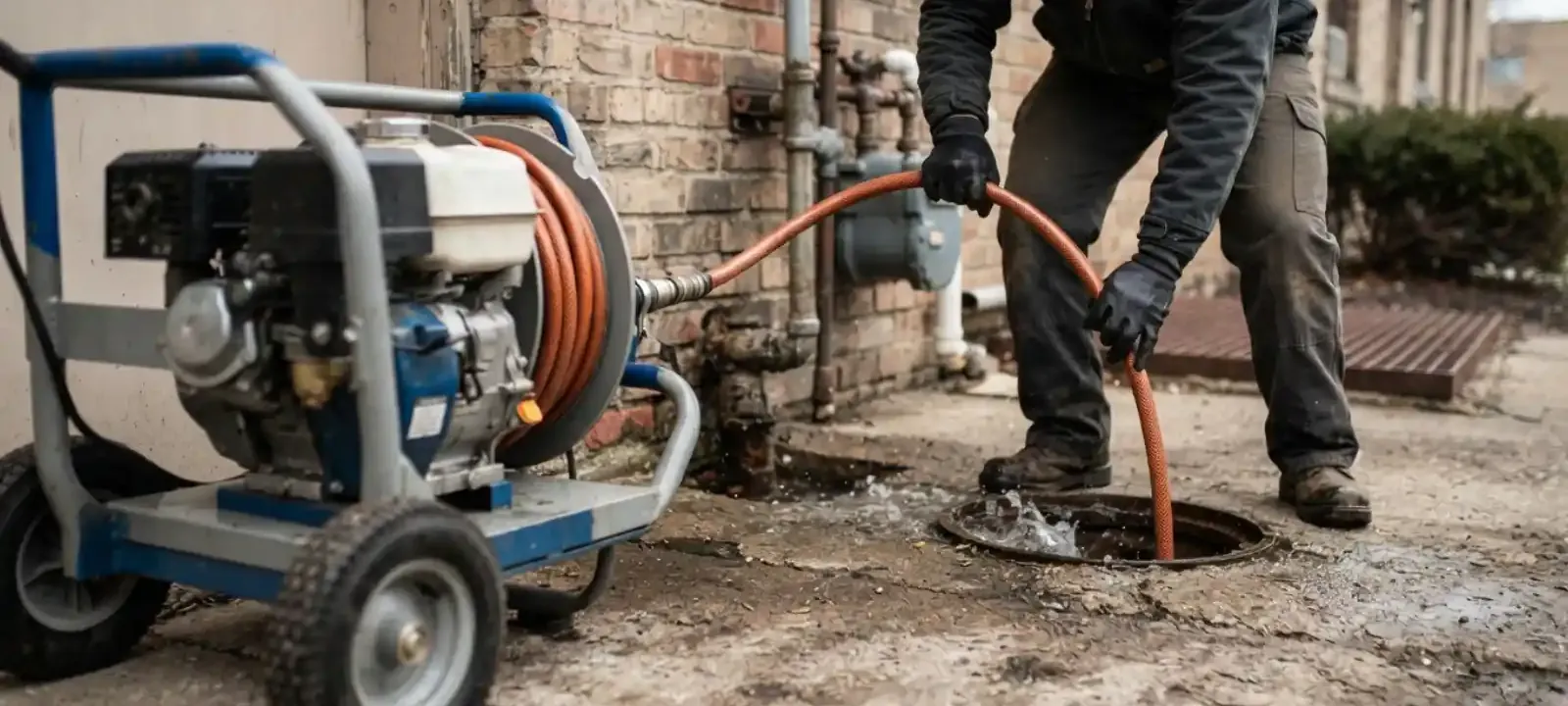
A main line backing up into a tub or floor drain is urgent, and 24/7 emergency dispatch can send a licensed plumber to look at it. Until then, stop running water, keep the washer off and call and describe where it backs up. Hydro jetting is a cleaning method that sends high-pressure water through a hose and nozzle to cut grease, scale and roots off the inside of a pipe.
Whether it fits your line is the plumber's call once the pipe and the blockage are known. That is why an old or cracked line often gets a camera look first, and the jet comes after.
Gurgling, slow drains and backups that keep returning
Jetting earns its place when a symptom repeats. Several fixtures drain slowly at once. The toilet gurgles when the washer empties. The tub burps air after a flush. A line gets cleared, runs well for a few months, and then fills again.
Those patterns describe a narrowed pipe, not a single plug. A cable can punch a hole the width of its head through the buildup, and water then uses that hole until the rest of the coating catches debris again. Scouring the full circumference is meant to bring the pipe back toward its original diameter.
Kitchen lines are the classic case, because cooled grease lines the wall. A simple rule helps. Cable work, described under drain cleaning, suits a single soft plug in an ordinary one-sink stoppage. Jetting is the step up when grease or scale coats the wall, or when the same line refills within months.
How the nozzle does the work
A jetting hose feeds a nozzle with several small orifices. Rear-facing jets pull the hose up the pipe and push debris back toward the opening, while a front-facing jet breaks up whatever is directly ahead. A plumber can change nozzle types, from a sharp one that bores through packed material to a wide fan that scrubs the walls.
The work runs from the cleanout in passes. Loosened debris travels with the water, so the plumber watches the cleanout to keep the pipe from overfilling. Roots get cut and flushed in the same passes, but a root mass growing through a joint will regrow until the joint itself is repaired.
If the plumber suggests adding a cleanout so future jetting is easier, that is plumbing work covered by code. The Alabama Plumbers and Gas Fitters Examining Board names the 2021 International Residential Code (IRC) for residential plumbing in its rule 720-X-1-.02, so check with the board for the current edition.
When a plumber would not jet
Pressure is a feature in a sound pipe and a risk in a damaged one. The table shows how a plumber can think about the pipe before committing to water.
| Pipe condition | Jetting call | Reason |
|---|---|---|
| Sound pipe with grease or scale buildup | Good candidate | Jetting is designed to clean the wall without scraping it |
| Heavy roots, joints still tight | Good candidate after cutting | Roots are cut and flushed, and they regrow unless the joint is repaired |
| Cracked, offset or sagging section | Camera first | Pressure can push debris into the break or wash soil in through it |
| Collapsed or crushed pipe | Do not jet | Water has nowhere to go, and repair is the only fix |
| Old, brittle pipe in unknown condition | Camera first | The wall condition should be seen before any pressure is applied |
A camera look is a short visit, and it can keep a jetting run from pushing debris into a break. If your line is old or has needed repeated clearing, see the footage through a sewer camera inspection and then decide.
Jetting also needs a specific machine, and not every plumbing visit arrives with one. When you call, ask whether jetting can be part of the visit for your line, or whether the plumber would clear it another way first. That answer should come with a clear price before work starts.
Main line backing up: what an emergency visit looks like
When sewage is rising in the lowest drain, the first goal is an open line. A plumber usually starts at the cleanout, and the choice between cable and jet depends on what the line is made of and what the blockage seems to be. Grease and heavy buildup point toward jetting. Finding the cleanout is covered under sewer line cleaning.
Night and weekend calls get the same questions as weekday ones. Which fixtures are affected, is the water dirty, and has anything unusual gone down the drain. The 24/7 line is for sewage that is already coming up, and same-day appointments when available cover lines that are slow but still draining.
Standing sewage is a health hazard
Keep children and pets out of any room with sewage on the floor. Do not wade through it barefoot. If water stands near outlets, appliances or a panel, stay out of that area and call the 24/7 line. If you can reach the breaker from dry footing, switch off power to the area.
Safety steps while the line is backed up
Do these until the plumber arrives, and do not run a drain cleaner into standing sewage.
- Stop using every sink, tub, shower and toilet in the house.
- Keep children, pets and bare feet out of any wet floor area.
- Do not open a cleanout cap if water is standing near it.
- Wear waterproof gloves and boots if you must move belongings.
- Photograph the damage before you clean up anything.
Getting the line ready for a jetting visit
Most of the prep is finding the access point and noting the pattern, so the plumber can spend the visit on the pipe. The steps below take a few minutes.
Find the cleanout
Look for a capped pipe in the yard, crawlspace, basement or garage, and clear plants or stored items from around it.
Hold back water use
Hold off on laundry, the dishwasher and long showers so the line stays calm.
Write down the pattern
Note which fixtures are slow, which gurgle, and when the last stoppage happened.
Protect the floor
Jetting can push water and debris out of open drains, so lift rugs and keep pets away from the work area.
Stay clear of the opening
Do not stand over an open cleanout while the hose is running, because spray and debris can come back out of it.
Gather past records
Any earlier camera video or invoices tell the plumber what has already been tried.
What comes out of the pipe
Expect grease that looks like pale, waxy gravel, gray sludge, wipes balled into ropes, hair mats, and in older lines flakes of rust or scale. Roots arrive as pale threads or chewed fibrous clumps. A plumber can show you what came back at the cleanout, and that points to the cause.
The material is a clue to prevention. Grease and wipes are habits you can change. Roots and scale mean the pipe itself is the source, and that leads to a schedule or to a repair, which is the subject of sewer line repair.
What changes the price of a jetting visit
Jetting is priced by the work in the pipe, so the same equipment can mean a short or a long visit.
Coverage varies by policy, so ask your insurer what yours covers and keep photos and the plumber's invoice. You get a clear price before work starts, and a short call gives you a number for your own line.
Setting an interval for lines that fill again
There is no universal schedule. Use your own history. If the last stoppage came after a long clear stretch, that gap is your interval, and booking jetting a little before it is easier than a weekend backup.
A line that fills within a few months of a good cleaning is a different case. That pattern usually means a sag, a root entry or a damaged joint, and the right next step is a camera, not a calendar.
Where your house line ends and the public main begins
The part of the line between your house and the public sewer is generally the homeowner's to maintain, but responsibility rules vary, so confirm with Pelham Water Works at 205.620.6420. If the cleanout or a camera shows the public main itself is full, that is the utility's number to call, rather than paying for repeat visits to your own line.
If you are in Helena, ask the Helena Utilities Board who handles the public line at your address. Whichever utility serves you, ask which side of the connection the stoppage is on before approving more work.
Line keeps clogging? Describe it.
Call and tell us where it backs up and how often. A licensed plumber will say whether a camera or the jet comes first.
Questions about jetting a drain line
Yes. Emergency dispatch runs 24/7, including nights, weekends and holidays. A line that is actively backing up into the house is the situation to call about right away, and the plumber decides on site whether to cable it, jet it or look with a camera first.
Lines that are slow but still draining can usually wait for a same-day appointment when available.
It should not, if the pipe is in sound condition. The water is designed to clean the wall without scraping it. The risk is a pipe that is already cracked, offset or badly corroded, where pressure can worsen the damage.
That is why older or repeatedly clogged lines should get a camera look first.
It clears roots from the pipe interior, but roots that enter through a joint or crack grow back. Jetting then becomes a maintenance step and the joint is the real fix.
A camera shows where the roots enter and how many entry points there are.
Yes, when grease is the cause and a plumber can reach the line. Access is through a cleanout, or through the trap once it is removed. Kitchen branches are narrow, so a small nozzle is chosen.
If the line is old or rough inside, a camera look can show whether it should be jetted at all.
The plumber stops and looks. A hose that stalls can mean a collapse, a severe offset or a solid obstruction, and forcing more pressure would not help.
A camera run can locate the spot by distance from the cleanout. Depending on what it shows, the next step may be a repair rather than more cleaning.