
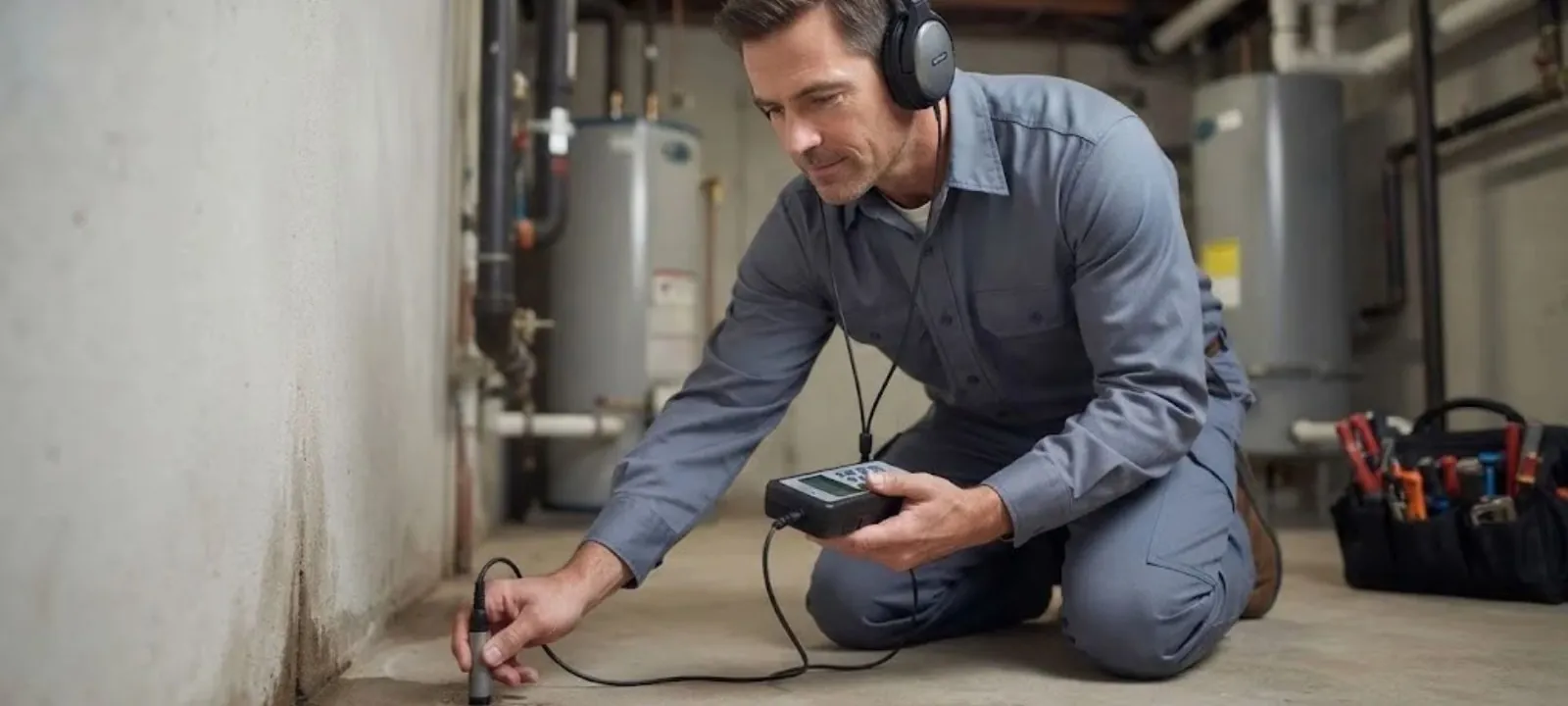
Water running where it should not is the call 24/7 emergency dispatch exists for. While you wait, close the main shutoff valve, stop running water and drains, and keep everyone away from wet outlets, light fixtures and plugged-in appliances. Leak detection is the work of finding the exact point where a pipe is losing water, using listening gear, thermal cameras and pressure tests so the repair can be small.
If you can safely reach the main, turn it off first and note what happens. A leak that stops when the main is closed is on the supply side. A stain that keeps growing with the main closed may be a drain, a roof, or a condensation problem instead. That one observation saves a lot of guessing when a plumber gets there. You can call the 24/7 line and describe what you saw.
Emergency leaks that should not wait until morning
Some leaks give you a few days, and others do not. Water pouring through a light fixture, a bowing ceiling, a wet floor you can hear running under, or a meter dial that spins with every tap closed cannot wait until morning. Call the 24/7 line for those, because a supply leak does not slow down on Saturday.
Slow leaks matter too. A drip behind a wall can feed mold and soften framing for months before a stain shows. A brown ring, a musty smell, peeling paint or a spongy floor should be treated as a live leak until a plumber proves otherwise.
Before you do anything else
Water and electricity do not mix. If water is standing near outlets, appliances or a panel, keep out of that area and call the 24/7 line. If you can reach the breaker safely from dry footing, switch off power to the area.
- Close the main water shutoff
- Move people and pets away from the wet area
- Photograph the damage for your records
- Do not run water or flush while you wait
Finding your main shutoff before you need it
The main shutoff is the valve that stops water to the whole house. It is usually where the supply line enters the building, often in a basement, crawlspace, garage or utility room, on an exterior wall, or near the water heater. It is either a round wheel handle that turns clockwise to close, or a lever that sits across the pipe when the valve is closed.
Find it on a calm day, check that it turns, and tell everyone in the house where it is. Do not operate any valve in the meter box, and if you are unsure which valve is yours, confirm with Pelham Water Works at (205) 620-6420. If you cannot find it during a leak, call the 24/7 line and the dispatcher will talk you through finding it.
The meter test you can run yourself
The meter records every drop that passes, so if it moves when nothing should be running, water is going somewhere. The test below tells you whether the leak is inside the house, in the line to the house, or not a supply leak at all.
Turn everything off
Close every faucet, make sure the dishwasher, washer and ice maker are idle, and pause any irrigation controller.
Find the meter and lift the lid
It sits in a ground box near the street or driveway. Brush off dirt and look for a small triangle or wheel that spins when water flows. Look only, and do not turn any valve at the meter.
Watch for movement
Note the reading or the position of the leak indicator, wait fifteen minutes, then check again. Any change means water is moving through the line.
Close the house main and repeat
Wait another fifteen minutes. If the meter stops, the leak is inside the house. If it keeps moving, the leak is in the line between the meter and your shutoff.
Toilets are the most common false alarm. A flapper that does not seal can pass water silently into the bowl and spin the dial slowly. Drop a little food coloring in each tank, wait without flushing, and see whether color reaches the bowl. The high water bill and meter guide goes deeper on reading the dial and ranking likely culprits.
Stains on a ceiling or a damp wall
Water travels. A brown spot in a dining room ceiling is often below a bathroom, but the pipe may be several feet away along a joist before it drips. Cutting a hole under the stain frequently misses the source and leaves you with two repairs.
A plumber can sweep the area with a moisture meter and a thermal camera to see where the damp is widest and coolest. Supply lines, drain connections, shower valves and tub overflows are the usual suspects. Roof and attic leaks look the same from below, so check whether the stain grows with the main closed.
Running water sounds and damp under the house
A hissing or trickling noise under the floor at night, a musty crawlspace, or a floor that suddenly feels cold are all common ways an under-house leak announces itself. Supply lines, drain joints and water heater connections run through that space and fail quietly. Standing water, soft insulation or dripping from a joint are good signs to photograph before you call.
Only go into a crawlspace if it is dry, well lit, and clear of wiring that is touched by water. A plumber can trace which pipe is wet, check the shutoff valves on the way, and tell you whether it is a joint, a pinhole, or a corroded section. Some of these turn into a burst pipe repair if a fitting lets go while you wait, so close the main early.
Slab leaks, warm floors and hissing concrete
A slab leak is a supply or drain line leaking beneath a concrete foundation. Signs include a warm patch on a floor, the sound of running water with every fixture off, damp carpet or flooring that lifts, and a water bill that climbs without explanation. Not every house has a slab, so the first question is simply what the floor sits on.
Locating a slab leak is a listening and mapping job. A plumber can use acoustic equipment to pick up the noise of pressurized water escaping, a thermal camera can show a hot line under the floor, and a pressure test on each branch narrows the zone. Once the spot is known, the work can be much smaller than tearing up the entire room.
| Option | Best when | Trade-off |
|---|---|---|
| Spot repair through the slab | One failed section in an otherwise sound line | Cuts a small opening in the floor and concrete, but the rest of the old pipe stays in service |
| Reroute through walls or attic | The slab line is hard to reach or keeps failing | Avoids more concrete work, but opens walls and adds new pipe runs |
| Repipe the affected branch or house | Several leaks or aging material throughout | Largest job upfront, fewest repeat visits afterward |
Larger replacement jobs are covered in the repiping service. Ask for a clear price before work starts, and ask which floor finish will be disturbed. Restoration, meaning flooring, drywall and drying out the structure, is a separate trade the plumber does not do, so plan for it separately.
Reroutes and repipes are plumbing work covered by code. The Alabama Plumbers and Gas Fitters Examining Board's rule 720-X-1-.02 names the 2021 International Residential Code (IRC) for residential plumbing and the 2021 International Plumbing Code (IPC) for commercial plumbing, and the board can confirm the current edition.
Buried lines, wet yards and the meter box
A soggy patch in a dry stretch of lawn, a sinking spot, or a dip in pressure points toward a buried supply line. Water follows the path of least resistance, so the wet spot may sit well away from the actual break. Listening along the line and pressure testing it can mark the point before any digging starts.
A leak that shows up in the meter box needs a quick check of who owns what. Ownership of the meter and the line around it can vary, so confirm the boundary with Pelham Water Works at (205) 620-6420 before anyone starts work, and call 811 before any digging. Serious line failures lead into water service line repair.
Sprinklers, valve boxes and pools
Irrigation is a common hidden leak. A valve that sticks open, a cracked riser or a broken head can run for hours every time the zone starts. Look for patches that stay soggy, zones that look weak, or a meter that moves only when the system runs. Sprinkler systems are often their own specialty, so ask on the call whether the plumber can help or whether the fault sits on the irrigation side.
Pool and spa leaks are usually a specialist job, since some water loss is normal from evaporation. If the level drops overnight even with the pump off, tell the dispatcher, and ask whether the supply and return plumbing is something the plumber can test.
How leaks are found: the tools and what each one is good at
No single instrument finds every leak. A plumber picks based on where the water is, what the pipe is made of, and what is above it, and chooses among these after seeing the leak.
| Method | What it finds | Limits |
|---|---|---|
| Acoustic listening | Hiss or hum of pressurized water escaping from a pipe | Struggles in noisy areas and with some plastic lines |
| Thermal imaging | Temperature differences from damp materials or hot water lines | Shows a zone, not an exact pipe |
| Pressure testing | Whether an isolated line holds pressure | Tells you a line leaks, not exactly where |
| Moisture meter | How far damp has spread in drywall, wood and subfloor | Cannot see inside a sealed cavity |
Methods are described here in general. We dispatch licensed plumbers who choose the right approach once they see the home. If the leak is in a drain or sewer line, sewer inspection with a camera is the better first step.
What affects the price of finding and fixing a leak
Detection and repair are different jobs, and you get a clear price before work starts for each.
Coverage varies by policy, so ask your insurer what yours covers and keep photos and the plumber's invoice. For a clear price before work starts, call us for a real number.
Keep the paperwork for your Pelham Water Works bill
Pelham Water Works has a leak adjustment policy that may reduce a bill after a qualifying repair, with documentation due within 60 days. Leaks that are easy to see may not qualify, and the policy lists leaking toilets, dripping faucets and irrigation left on as excluded.
Keep the plumber's invoice and photos of the repair, and ask the plumber to write where the leak was and what was done. Policy at time of writing, confirm current terms with Pelham Water Works, and see the meter and bill page for how it works.
We serve Pelham, AL in Shelby County and nearby towns, and calls from Alabaster come to the same dispatch line. Same-day appointments when available, and 24/7 emergency dispatch overnight and on weekends.
Water still going somewhere you cannot see?
Close the main, then call the 24/7 line and describe what you found. Licensed and insured plumbers will take it from there.
Leak questions we hear most often
Yes. The dispatch line is open 24/7, including nights, weekends and holidays. An active leak is the case to call about right away, and same-day appointments when available suit slower ones such as a stain that is not growing.
While you wait, close the main shutoff valve, stop using drains, and keep clear of wet electrical areas. If you cannot find the main, the dispatcher can talk you through it.
Run the meter test. Turn off everything, note the meter, wait fifteen minutes, and check again. Then close the house main and repeat for another fifteen minutes.
If the meter stops with the main closed, the leak is inside. If it still moves, the leak is in the line between the meter and the house.
Often, yes. Acoustic listening, thermal imaging, moisture readings and pressure tests can narrow the location before a hole is cut. The opening is then small and planned.
Not always. Once the leak is located, a spot repair may be possible. Reroutes or repiping come in when the line is failing in several places.
It depends on the policy, so ask your insurer what yours covers before repairs if you can. Photograph everything and keep the plumber's invoice.
Sprinkler zones and the supply line to a pool or spa are sometimes within a plumber's reach, and sometimes they are a specialist's work. Tell the dispatcher what the system is and where the water seems to go, and ask who should look first.
Structural shell leaks and pool equipment faults usually need a pool specialist.