
If you smell gas near your water heater, stop reading and leave. Get everyone out, do not touch switches or light anything, and call your gas utility or 911 from outside. Everything below can wait until the air is clear and the gas has been checked.
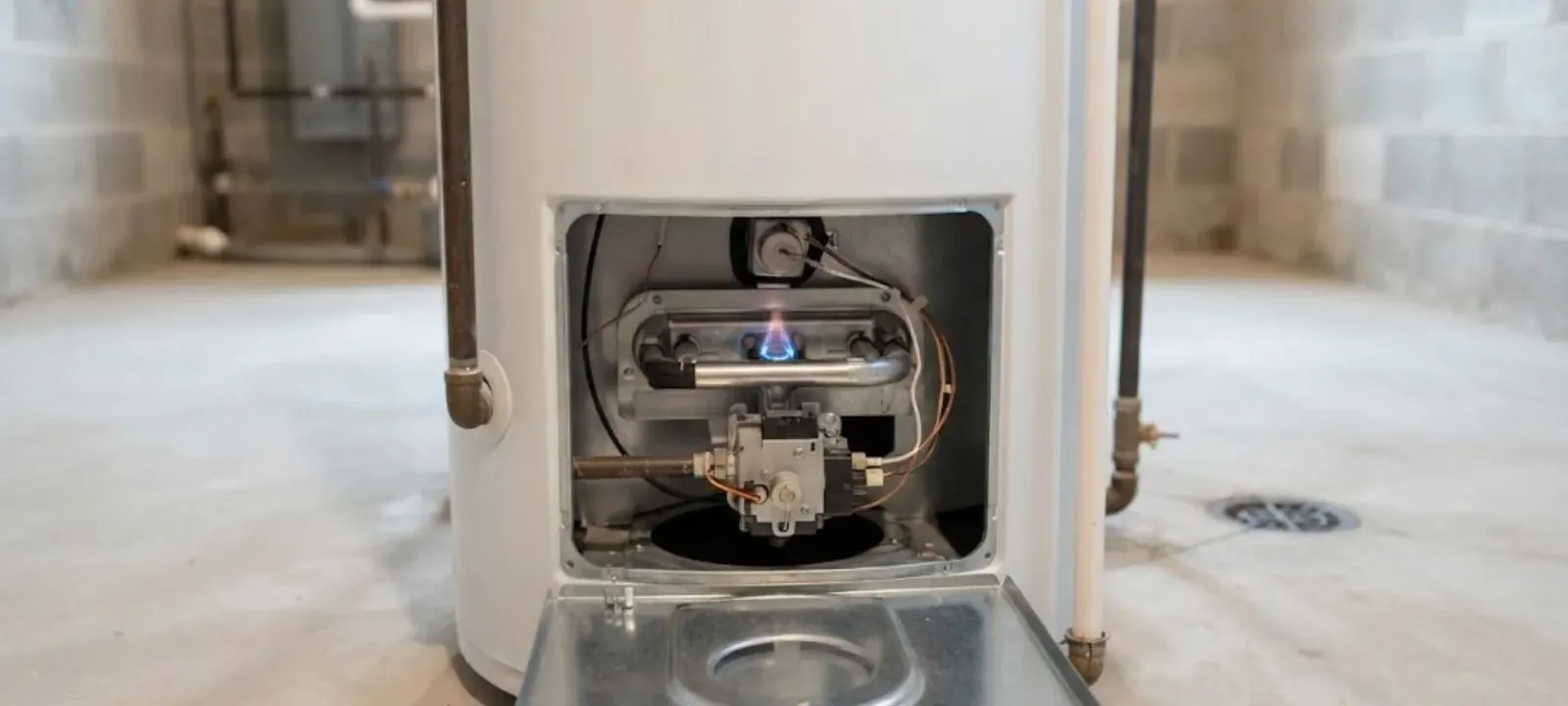
A thermocouple is a small safety sensor on a gas water heater. It sits in the pilot flame, makes a tiny electrical signal from the heat, and holds the gas valve open. If the pilot goes out, the signal drops and the valve closes so raw gas does not keep flowing. That is why a failing thermocouple shows up as a pilot that lights and then dies, though the same symptom has other causes.
How a failed thermocouple behaves
The pilot lights while you hold the control knob down. You release it after the usual wait, and the flame goes out. A worn thermocouple cannot hold the valve open, so the system does what it was built to do and shuts the gas.
The part wears from years of heat cycles. The tip can corrode, the connection at the gas control valve can loosen, or the metal can become weak. Sooty flame, a dirty pilot opening, or drafts can also keep the tip from getting hot enough.
Thermocouple, thermopile, and flame sensor
Not every heater uses the same device, and the part you buy has to match the system. The table below sorts the three you will hear about.
| Part | What it does | Typical symptom when it fails |
|---|---|---|
| Thermocouple | Generates a small signal from the pilot flame to hold the gas valve open | Pilot lights then goes out when the knob is released |
| Thermopile | Several junctions in series for a larger signal that powers a millivolt control valve | Weak or no response from the valve even with a steady pilot |
| Flame sensor (electronic ignition) | Senses the burner flame and tells the control board to keep gas flowing | Unit lights, then shuts down after a few seconds and shows an error code |
| Gas control valve | Meters gas and responds to the sensor signal | Pilot burns well and the sensor tests fine, yet the burner will not stay on |
Read your heater's label first. It tells you the system type, the fuel, and the model, and those details decide which part is correct.
What can go wrong besides the thermocouple
Replacing the first part you suspect is how people spend money twice. A pilot that will not stay lit can also come from a dirty pilot tube, a draft, a failing gas control valve, a blocked vent, or a heater that is not getting enough air.
Blocked venting is the serious one. If exhaust cannot leave the house, the burner can spill carbon monoxide into the room. Soot on the draft hood, a scorched look, or a heater that cycles oddly are reasons to stop and call, and a carbon monoxide alarm is strongly recommended. Have a working alarm on each level and near sleeping areas. If it sounds, or anyone has a headache, nausea or dizziness, get everyone outside and call 911.
If the tank itself is leaking, a new sensor will not help. Water on the floor under the heater, or rust at the base, points toward replacement. Shut off the cold water supply to the heater and keep people clear of the wet area. If it is safe to reach, set the gas control to off.
The line between homeowner and plumber
Stop and call if any of these is true
Gas parts need a leak test after any work, which is why the list below ends where it does.
- You smell gas at any point.
- The pilot will not stay lit after you have followed the maker's relight steps once.
- You see soot, scorching, rust flakes, or water on the burner.
- The gas control valve, a gas connection, or the vent would need to be touched.
- You are unsure which part your model uses.
Relighting the pilot by the book printed on the heater label is something many owners do. Follow the label's steps exactly, including any wait it prints to let gas clear. If you smell gas at any step, stop, leave, and call your gas utility or 911 from outside. Opening the gas connection, loosening fittings, or replacing the gas valve is not. Those are jobs for licensed people who can leak-test the work afterward.
Homeowners in Helena and Alabaster should draw the same safety line, and we serve both towns along with Pelham.
What a plumber checks on a visit
Confirm there is no gas leak
Connections are checked with a leak detector or soap solution before anything else.
Inspect the pilot assembly
Flame color, pilot tube, and the sensor tip show whether the flame reaches the part correctly.
Test the sensor and valve
A meter checks the thermocouple signal. If it is fine, the gas control valve is the next suspect.
Check venting and air
Draft, flue condition, and combustion air are checked because a good part cannot fix a bad exhaust path.
Decide on repair or replacement
A small part on an old, rusting heater may not justify the repair. The water heater installation page explains what a replacement involves.
Pilot dies and you do not smell gas?
Call (855) 575-2890 any time. Emergency dispatch is 24/7. If you smell gas, get outside and call your gas utility or 911 first, then call us.
Gas work and who regulates it in Alabama
Alabama licenses plumbers and gas fitters through the Plumbers and Gas Fitters Examining Board, and the board has an online Licensee Search at pgfb.alabama.gov. Before a stranger touches the gas line on your water heater, look them up there.
Board rule 720-X-1-.02 names the 2021 International Residential Code (IRC) for residential plumbing and gas installations, and the 2021 International Fuel Gas Code for commercial gas. Editions change, so check the board for the current one. If a repair involves moving the heater, changing the vent, or touching gas piping, ask the plumber which code edition the work follows.
For any gas smell in Pelham, call your gas utility or 911 from outside the house. Do not use a phone or light switch inside until you are out.
Source: Alabama Plumbers and Gas Fitters Examining Board, rule 720-X-1-.02 and the online Licensee Search.
Thermocouple questions, answered carefully
A thermocouple fails by letting the pilot go out soon after you release the knob. A gas valve failure often leaves the pilot burning fine while the main burner will not fire. Only a meter and a visual check tell them apart for sure.
It involves a gas connection, so we advise against it unless you are trained and have the right tools. A bad connection can leak gas, and a leak is a fire and explosion hazard.
No. A pilot that will not light usually has a gas supply, ignition, or blockage problem. The thermocouple only matters once the pilot is lit.
There is no honest single figure. Heat, drafts, soot and part quality all matter. If the pilot starts to die, have it tested rather than guessing.
Cost depends on the heater type, how easy it is to reach, and whether anything else is wrong. We do not publish numbers, but we give a clear price before work starts.
On a heater with a standing pilot, no. The thermocouple is the safety shutoff, and running without a working one removes protection against gas flowing with no flame. Electronic-ignition models use a flame sensor instead, and the same rule applies to it.
Use the Licensee Search at pgfb.alabama.gov, the site of the Alabama Plumbers and Gas Fitters Examining Board. Search by name or business, and ask anyone who quotes gas work for their licensing details.