
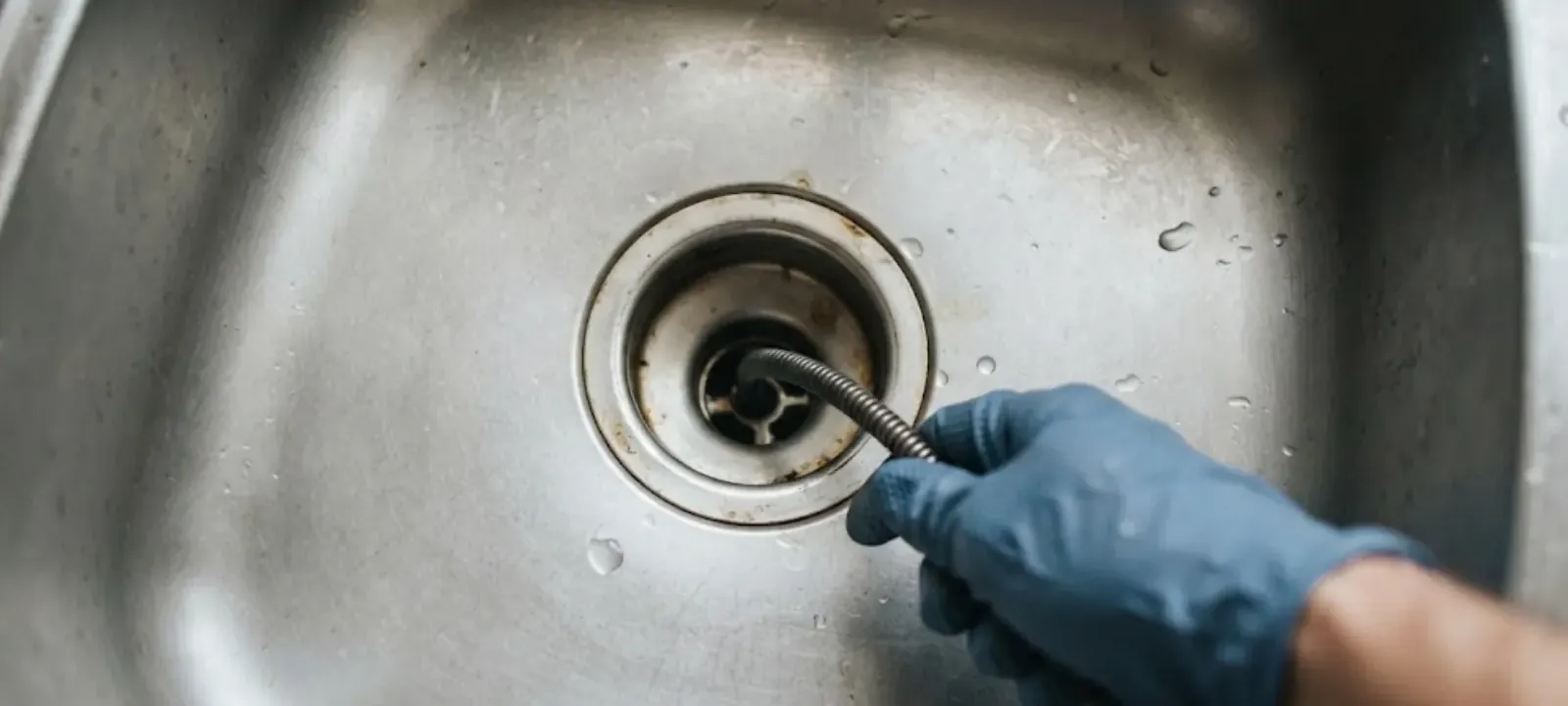
A drain that moves water slowly with no obvious clog is one of the more confusing plumbing problems. The plunger does nothing, the liquid cleaner did nothing, and yet the basin takes two minutes to empty. The cause is usually partial. Something is narrowing the pipe, or air is not getting into the system, or the problem is farther along than the sink itself.
Time it before you touch anything
Fill the basin about halfway, pull the stopper, and watch. Note how long it takes to empty, whether the water swirls or sinks flat, and whether you hear a gulp or see bubbles rise. Those three clues give you a starting guess before you pick up a wrench.
A flat, steady slowdown can point to narrowing in the pipe. A swirl followed by a gurgle can point to a venting problem, though a partial blockage farther down causes that too. A fast start that slows near the end can point to a coated trap holding water behind a lip of buildup.
Partial blockages hide in plain sight
A full clog stops the water. A partial one lets water trickle through a narrow channel in the middle of the pipe. Hair wraps around the pop-up stopper rod, soap binds with it, and the channel shrinks over weeks, so you never notice the day it got bad.
Pull the stopper straight up or unscrew the pivot nut under the sink. Expect a dark, slimy wad on the rod. Clean it with a bent wire or an old toothbrush, and most bathroom sinks speed up right then.
The P-trap and the film inside it
Check for drain cleaner before you open the trap
If you have poured liquid drain cleaner into this sink, do not open the trap. Chemical may be sitting in the bend, and it can burn skin and eyes. Wear gloves and eye protection, or call a plumber and tell them what was used, and never mix products.
Once you know no chemical is sitting in it, place a bucket under the trap, loosen the two slip nuts by hand, and drop the curved section. Check inside the bend and the short pipe leading to the wall. Biofilm, a thin slime of bacteria feeding on soap and skin oils, can line the walls like cooking grease in an old pan.
Scrub it out with a bottle brush, rinse, and reassemble with the washers seated flat. Hand-tighten, then snug a quarter turn. Run water and look for drips at both nuts.
When the vent is the real problem
Every drain needs air behind the water, the same way a juice carton glugs when you pour it with the cap on. A plumbing vent pipe runs up through the wall and out the roof to supply that air. If it is blocked by a bird nest or leaves, water leaves the sink slowly and the trap can gurgle or siphon dry.
Vent layout is part of the plumbing code, and the Alabama Plumbers and Gas Fitters Examining Board rule 720-X-1-.02 names the 2021 International Residential Code for residential work, so check the board for the current edition.
Stay off the roof
Clearing a roof vent means working at height. Do not climb up without proper fall protection. A plumber can check vent flow from the inside or from a safe position, and a roofer can handle the access.
If the sink gurgles when it drains and a second tap running nearby makes the gurgle worse, venting is a strong suspect. A plumber can confirm it by listening while water runs and by checking airflow at the roof opening.
Buildup inside older pipe
Over the years, metal drain lines can pick up a rough crust of scale, grease and soap residue, shrinking the opening. Older galvanized or cast iron drain pipe can be lined with a crust that catches everything passing through. A snake clears the loose material, but scale itself is stubborn.
If the slow drain is on an older run and keeps coming back a month or two after cleaning, the pipe wall may be the issue. A camera shows the actual condition, and that decides between cleaning, descaling with a jetter, or replacing a section.
Sink slow, tub slow, toilet sluggish
When more than one fixture is affected, the trouble is in the branch line or the main. Several drains join before they leave the house, and a partial blockage there slows everything feeding it. Washing machines that suddenly overflow their standpipe fit this pattern too.
Run the dishwasher and the shower together and watch the lowest drain in the house. If it bubbles or rises, stop using water and call the 24/7 line. A plumber can use cables and cameras for sewer line cleaning, and a slow main with no clear cause is a good reason to have the line looked at.
Reading the symptoms
| What you see | Likely cause | First move |
|---|---|---|
| One sink slow, others fine | Stopper rod or trap buildup | Clean the stopper and the P-trap |
| Slow with gurgling, others fine | Partial vent restriction or a long run | Test with another tap on, then call a plumber |
| Sink and tub both slow | Shared branch line narrowing | Snake the branch or book a camera look |
| Every fixture slow, lowest drain bubbles | Main line partial blockage | Stop water use and call a plumber |
| Slow again within weeks of cleaning | Scale or damaged pipe wall | Camera inspection before more cleaning |
Getting the line properly cleared
A home snake clears a clump. It does not scrape the full pipe wall. For repeat slowdowns, a plumber can run a cable with a cutting head, then follow with a camera to check the pipe. Ask the plumber what they found in the line and what they cleared, as part of drain cleaning.
Kitchen sinks follow the same logic, with grease and food added. If the dishwasher drains back into the sink, or the sink slows only after the disposal runs, the restriction is usually beyond the trap, so a plunger or trap cleaning may not fix it.
We serve Alabaster and Helena as well as Pelham, with same-day appointments when available. See the Alabaster and Helena pages for those towns.
Pelham water, scale, and the city sewer side
The Pelham Water Works 2024 water quality report lists a wide spread of total hardness values, and the city draws on both wells and purchased water. That means two homes a few streets apart can get different water. If your slow drains return every few months, test your tap hardness or ask Water Works for your area, then plan on periodic cleaning and a camera check.
Water Works also runs the city sewer. When several fixtures slow together, run the lowest drain test described above and tell the plumber what you found. A plumber can see whether the restriction is inside your house line, and if the blockage looks like it is beyond your house line, call Pelham Water Works at (205) 620-6420.
Source: Pelham Water Works 2024 Annual Drinking Water Quality Report and Pelham Water Works contact information.
Slow drain questions we hear most
A partial blockage is the usual reason. Hair on the stopper rod, a coated P-trap, or a pipe narrowed by buildup lets water through slowly. Pull the stopper and drop the trap before you assume the pipe itself is bad, after checking that no drain cleaner is sitting in the sink.
Yes. Without air behind the water, drainage slows and the trap may gurgle. If cleaning the stopper and trap changes nothing, a vent check is the next step.
It is rarely the best choice. A chemical cuts through a thin film but sits uselessly in a partial blockage of hair, and it can attack old fittings. Never mix cleaners, and never plunge or open the trap on a sink that has chemical standing in it.
Mechanical cleaning gets better results.
Check the other fixtures. If two or more are slow, or the lowest drain in the house bubbles when you run water upstairs, the main or a shared branch is involved and a single-sink fix will not help.
Clean it when the sink slows, and check it more often if it slows repeatedly. Kitchen traps collect grease and food, so they usually need attention sooner than bathroom ones.
Not directly. The 2024 Pelham Water Works report lists a wide hardness range, so some streets have harder water than others. Hardness mostly shows up as soap scum and spotting.
If your street's water is on the harder end, plan on cleaning the stopper and trap more often.