
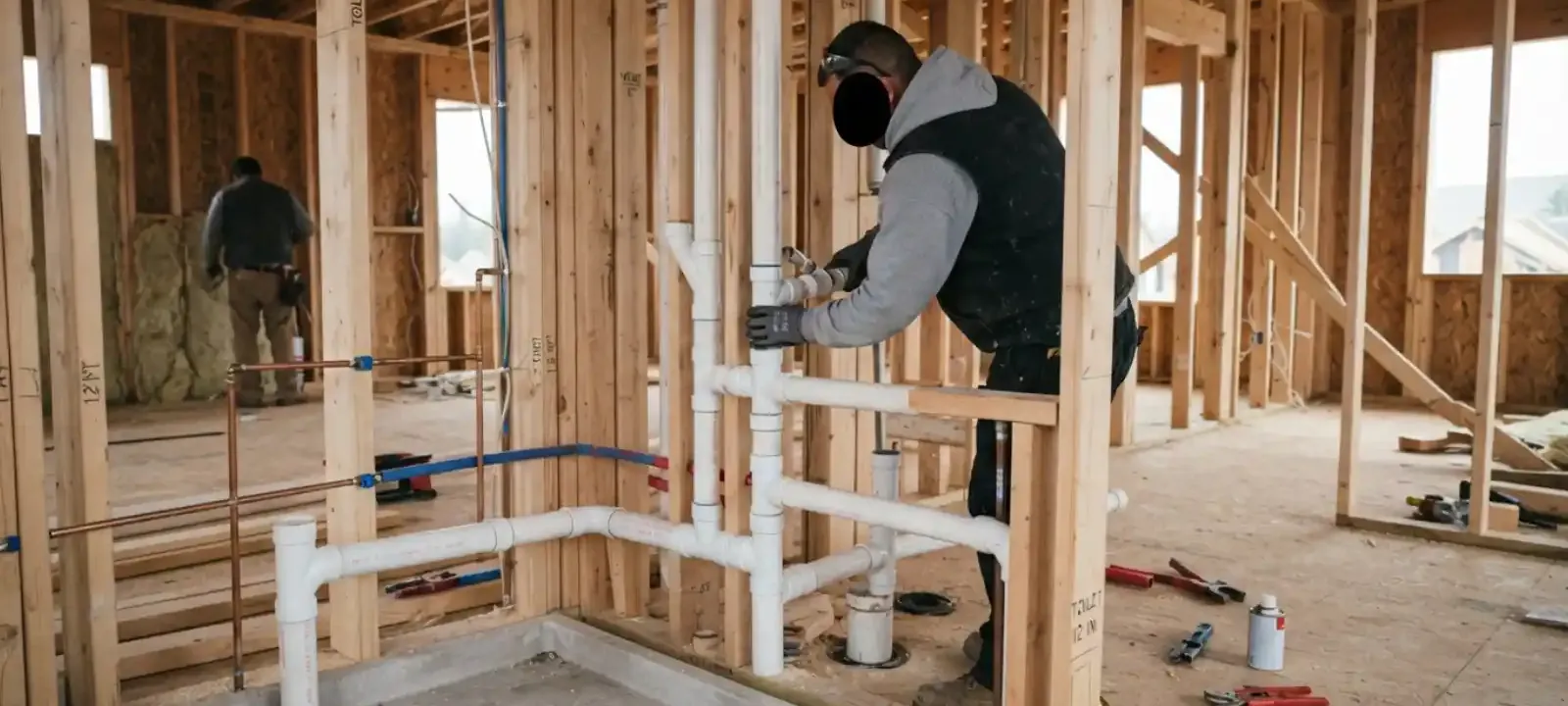
The pipe sticking out of your roof is a plumbing vent, and most homeowners only think about it when a drain starts gurgling or a bird flies out of it. A plumbing vent pipe cap is the small cover on top that keeps leaves, nests, and animals out while the pipe stays open to the sky. This page covers when a cap helps, when it causes trouble, and which parts of the work belong on the ground.
The vent does a quiet job. It lets air into the drain system behind every flush and every draining sink so water can leave without pulling a vacuum. It also gives sewer gas a path up and out above the roof instead of into your rooms.
This guide covers when a cap helps, when it causes trouble, how to read the signs of a blocked vent, and which parts of the work belong on the ground.
How air moves through your drain lines
Every fixture has a trap, the U-shaped bend that holds a plug of water to block sewer gas. When water rushes down the drain, it needs air behind it. Without that air, the moving water pulls on the trap and can siphon the plug out, or it slows to a glug.
Most houses join several vent branches into one or two openings through the roof. A blockage at the top can starve a whole branch. That is why one clogged vent can make a tub, a toilet, and a kitchen sink all act strangely on the same afternoon.
Caps, screens, and bare pipe: what belongs on top
A bare open pipe works fine in many cases. A cap earns its place only when it protects the opening without closing it. The choices look like this.
- Open pipe with no cover: the best airflow, but rain, leaves, and nesting birds can drop straight in.
- Hooded rain cap: a small dome held above the opening on short legs, so air slips in underneath.
- Wire screen: stops birds and rodents, but fine mesh can pack with debris and needs a look now and then.
- Sealed cap or glued plug: wrong on any active vent, because it shuts off the air the system depends on.
Plumbing codes set limits on vent height above the roof and distance from windows and air intakes, and those limits depend on the edition in use. Ask the plumber to confirm them for your roof rather than copying a neighbor's.
Reading the symptoms of a blocked vent
Vent trouble imitates a clogged drain, which is why people snake a fixture three times before anyone looks up. Use this table to sort what you hear and smell.
| What you notice | What it may mean | Next move |
|---|---|---|
| Gurgling after a flush or tub drain | Air is being dragged through traps because a vent is partly blocked | Test several fixtures, then have the roof opening inspected |
| Slow drains at many fixtures, plunger helps only briefly | Vent restriction or a main line problem | Try one fixture, and if the rest still lag, ask for a camera look |
| Sewer smell indoors while traps are full | A cracked vent pipe in the attic or wall, or a vent not carrying gas up | Check the attic for damp or broken pipe, then call a plumber |
| Smell outside near the roofline or windows | A cracked vent, a dry trap, or less often a vent opening placed near a window or air intake | Ask a plumber to check the pipe and the opening location |
| Water stain on the ceiling around the pipe | Failed rubber boot at the roof, not a clog | Have the flashing repaired before the next rain |
One safety point on smells. A rotten egg odor can come from a dry trap or from natural gas. If you cannot tell which, leave the house and, once you are outside, call your gas utility or 911 before touching anything.
Why a vent should never be sealed shut
Someone stops a smell or a wasp problem by gluing a plug into the pipe. The air path closes, drains slow, traps siphon, and the smell moves indoors through the trap you hoped to protect.
If you find a vent capped tight by a previous owner, treat it as a repair item. Do not climb up and yank it off yourself. Hand it to a plumber who can reopen it and check the pipe below.
Some homes use an air admittance valve at a fixture instead of a roof vent. Whether one is allowed depends on the code edition and the local inspector, so ask before relying on one.
New fixtures raise the same issue. When a bathroom is added or a sink is moved, the vent must be planned with the drain. That is part of plumbing installation work, and it is why a vent should never be improvised with a short stub and a cap.
Nests, leaves, and what actually blocks the pipe
Birds nest in open pipe in spring, wasps build inside the hood, and leaves and shingle grit pile up at the narrow spot. A vent only two inches across can close up fast once a nest packs in.
Blockages often form near the top opening, where nests and debris collect. A plumber can often clear them from the roof opening. If symptoms continue, a camera look at the main drain checks for a second cause. If an animal is stuck in the pipe, do not reach in. Call wildlife control.
Who goes on the roof and who stays on the ground
Roof and ladder work is a fall hazard
A ladder at gutter height, a steep pitch, wet shingles, or a power line near the vent are all reasons to hire the job out.
- Never climb a wet, mossy, or frosty roof.
- Never work alone on a ladder.
- Stay away from overhead service wires.
A homeowner can do plenty from the ground. Listen for gurgling, run water at each fixture, look at the pipe through binoculars, and check the attic for damp or cracked pipe.
If you live in Alabaster or Helena, the same ground-level checks apply, and we serve both towns along with Pelham.
What a plumber checks inside and out
Run every fixture
Water goes down each drain in turn so the sound and speed show which branch is starving for air.
Inspect the roof opening
A plumber looks for a nest, debris, a crushed pipe, a tight cap, and a cracked rubber boot.
Clear and confirm
The pipe is cleared, then water is run again to make sure the gurgle is gone and traps hold their seal.
Look for a second cause
If symptoms stay, a camera can check the main drain, since a vent problem and a line problem can overlap.
Drains gurgling and you cannot find a clog?
Call the 24/7 line and describe which fixtures act up. The dispatcher can help you work out whether it sounds like a vent, a drain, or both.
Vent work, the state plumbing board, and who to ask about permits
Alabama's Plumbers and Gas Fitters Examining Board rule 720-X-1-.02 names the 2021 International Residential Code for residential plumbing and gas installations. Vent height and clearance rules come from the plumbing code the installer works to, so ask which edition the work follows. If a quote or an old repair on your roof looks off, ask the installer which edition it follows, and check the board for the current edition since these get updated.
Permit rules vary by job. Before you add a vent for a new fixture or reroute an existing one, call the Pelham Building Department at 205.620.6495 and ask. Asking first beats tearing out work that fails inspection.
Source: Alabama Plumbers and Gas Fitters Examining Board rule 720-X-1-.02, and the City of Pelham Building Department.
Vent cap questions homeowners ask
Not always. Many vents work fine open. A cap is useful where birds, rodents, or leaf debris are a repeat problem, as long as it leaves a wide path for air.
The cap is simple once you are at the pipe, but reaching a roof vent is the dangerous part. We recommend leaving roof work to a plumber. If you can see the opening only from the ground, use binoculars to check for a nest or debris and stop there.
Yes, some does, and it runs harmlessly down the pipe into the drain. The system is built for that. A cap mainly keeps out leaves, nests and animals, not the rain itself.
A clog at one trap affects that fixture. A vent problem tends to show at several fixtures, with gurgling and slow draining, and plunging fixes it only for a short time.
Yes. Poor venting can siphon the water out of a trap, which lets sewer gas into the room. A cracked vent pipe in the attic can also let sewer gas into the house.
Call the Pelham Building Department at 205.620.6495 before work starts. Permit rules vary by job, so describe exactly what is being changed and ask what applies.