
Many household clogs are a plug of hair, soap film, and food residue sitting within a few feet of the drain opening. A plug that close can often be cleared with tools already in your house. This guide covers the natural and low-chemical options in order of how well they work, then explains where each one stops being useful.
The plunger beats everything you can pour
What to do before you start
Run through this short list first, because a few minutes of checking prevents the common injuries.
- Find out whether anyone poured a chemical drain cleaner. If so, do not plunge, snake, or open the trap, since the splash can burn skin and eyes
- Wear gloves and eye protection for any work on a trap
- Never mix two products in one drain
- Stop and call a plumber if sewage is coming up or several fixtures are slow at once
A plunger works by moving water back and forth against the clog, which loosens it and pushes it along. Pouring something on top of a clog does not do that. For a bathroom or kitchen sink, use a cup plunger, fill the basin with enough water to cover the rubber, and seal the overflow hole with a wet rag.
Then pump firmly ten to fifteen times without breaking the seal. If the water drops and drains in a swirl, you are done. If a double kitchen sink is involved, block the other drain with a stopper first, or the pressure just escapes through it.
What baking soda and vinegar really do
Pour half a cup of baking soda down the drain, follow with half a cup of white vinegar, and the mixture fizzes. The foam is carbon dioxide and water, and it is mostly harmless. It can loosen a thin film of grease or soap on the pipe wall, and it deodorizes a smelly trap.
It will not dissolve a hairball or push through a packed plug. Think of it as maintenance, not rescue. Cover the drain for ten minutes, then flush with hot tap water, and repeat once a month if a sink tends to slow down.
Hot water and dish soap for grease
A kitchen drain that slows after a week of cooking is often coated in cooled fat. A squirt of dish soap followed by a pot of hot tap water cuts through that coating. Hot tap water is enough for most pipes.
Keep boiling water out of the drain
Never pour boiling water down a drain. It can crack a porcelain toilet bowl or sink and can soften the glued joints on PVC drain pipe. Use hot tap water at most.
Using a hand snake without wrecking the trap
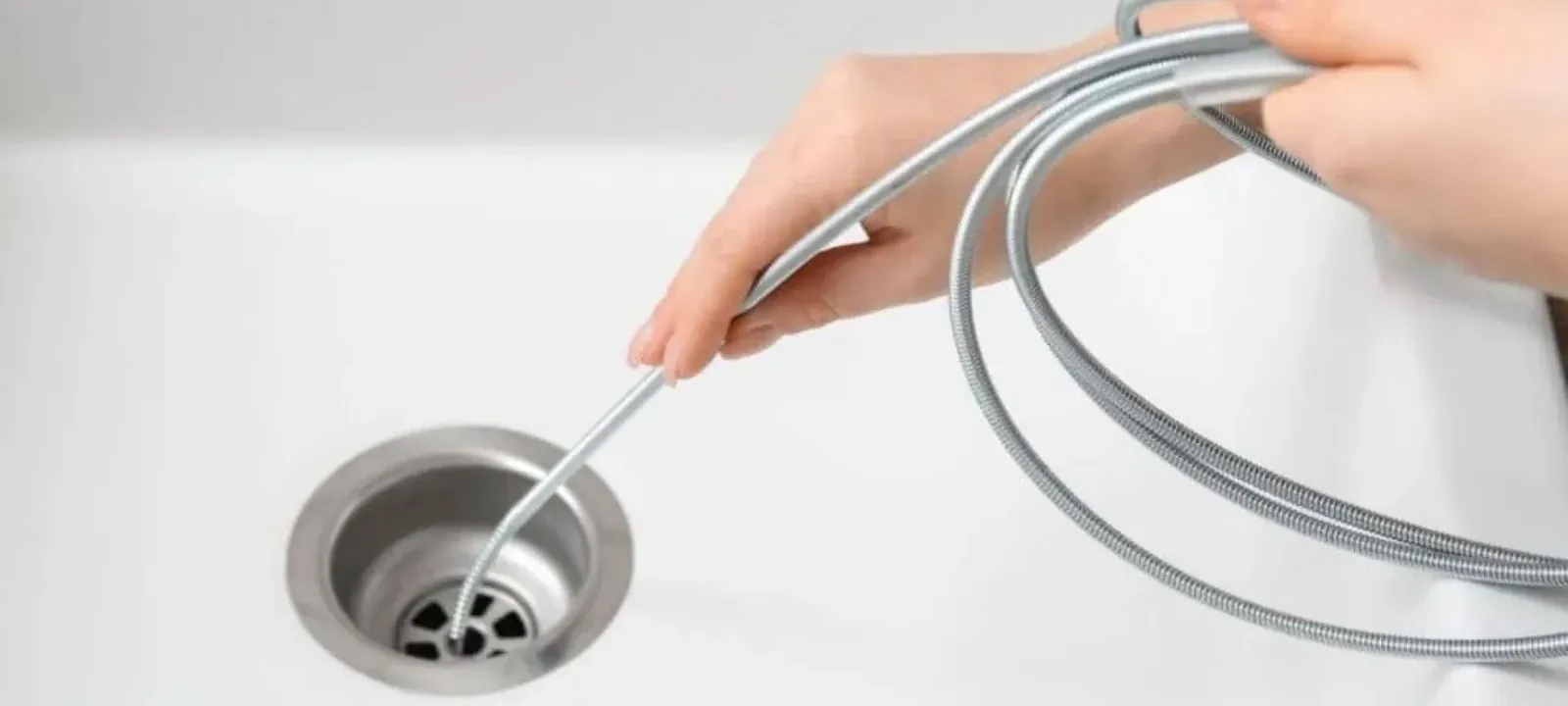
A small hand-crank drain snake, sometimes called a drum auger, is the step between a plunger and a plumber. It reaches about 15 to 25 feet of line and either hooks the clog or breaks it up. Take your time and let the cable do the work.
Open the access
Pull the pop-up stopper or strainer. For a sink, put a bucket under the P-trap and loosen the slip nuts if you prefer to snake from the wall stub.
Feed the cable
Push until you feel resistance, then tighten the thumbscrew and crank clockwise while pushing gently.
Pull and clean
Retract slowly. Expect a gray, smelly clump of hair on the end, and wear gloves.
Flush and test
Run hot water for a full minute and watch whether the basin empties at the same speed as the water arrives.
Stop if the cable will not advance after a few firm tries or if it feels springy in a way that suggests a bend or a pipe change. Forcing it can scratch an old pipe or push the clog into a branch line.
Enzyme cleaners for slow buildup
Enzyme and bacteria-based drain products digest organic film such as soap scum and food residue. They work slowly, usually overnight, and they do nothing against hair, a toy, or a collapsed pipe. Their best use is monthly upkeep on a kitchen sink or a shower that never fully drains.
Use them when the sink has been sitting idle, not right after a harsh chemical, since the chemical can kill the cultures. Follow the label for contact time and keep the water off until it is up.
Which remedy fits which clog
| Remedy | Works well on | Poor choice for |
|---|---|---|
| Cup plunger | Soft sink and tub plugs close to the drain | Anything deeper than the trap arm |
| Baking soda and vinegar | Light grease film and odors | Hair clumps and packed debris |
| Hot tap water and dish soap | Cooled kitchen grease | Fully blocked pipes, since water cannot reach the plug |
| Hand snake | Hair and soap plugs up to about 25 feet away | Tree roots or main sewer line blockages |
| Enzyme cleaner | Slow drains from organic buildup | Physical objects and sudden total blockages |
Why bottle openers are the wrong shortcut
Caustic and acid openers can generate heat as they work, and labels often warn against leaving them in standing water. Worse, they leave a hazard behind. The next person to snake the line or pull the trap gets splashed with a chemical.
If a chemical has already been poured, tell the plumber before anyone opens the trap. Wear gloves and eye protection, or call a plumber. Never plunge or snake a drain that has chemical cleaner standing in it, since the splash can burn skin and eyes. Never combine two products, and do not add a chemical to a toilet that is already full, since it can overflow.
If your kitchen sink has a disposal or dishwasher, a clog that makes the dishwasher drain back into the sink is a branch problem, not a plunger job. Stop running the dishwasher and have the line checked.
When it is time to hand it off
Call a plumber if the same drain clogs again within a week, if water backs up in a second fixture, or if the tub gurgles when the washer drains. Those point at a shared branch or the main line, which a home snake cannot properly reach. A plumber can run cables and a camera for drain cleaning, and a stubborn grease or scale-lined pipe may call for hydro jetting, which scours the pipe wall with high-pressure water.
Drain work falls under the plumbing code, so check the Alabama Plumbers and Gas Fitters Examining Board for the current International Plumbing Code (IPC) edition.
If sewage is coming up in the lowest tub or floor drain, stop using water, keep children and pets away, and call the 24/7 line. A clog in Alabaster or Helena gets the same dispatch line, so it does not have to be inside Pelham.
Pelham water and sewer: who to call for what
Pelham Water Works supplies both drinking water and sewer service. According to its 2024 water quality report, the pH is 7.3 and the water is rated non-corrosive, so the water itself is not a likely cause of a clog, though soap and hair are.
The report also says supply comes from local wells plus purchased water, so your street may get a different mix than a neighbor's. If your water seems different from theirs, ask Pelham Water Works at (205) 620-6420 before you blame your drains.
Because the same utility runs the city sewer, a clog that backs up several fixtures could be in your house line or in the main. Run water at a second fixture to check. If the backup is house-wide and the plunger does nothing, call a plumber first, who can tell you whether the blockage is in your house line or points toward the main. If it does, contact Pelham Water Works.
Source: Pelham Water Works 2024 Annual Drinking Water Quality Report and Pelham Water Works contact information.
Questions about home drain fixes
Only a light one. The fizz can loosen a thin coat of grease or soap, but it has little force against hair or a packed plug. Use it to freshen a slow drain, and use a plunger or a snake for an actual blockage.
No. Boiling water can crack porcelain and soften PVC joints. Hot tap water does most of the same job with less risk.
Most labels call for several hours or overnight with no water running. The product digests film slowly. If the drain is still sluggish after two nights, the problem is probably not organic buildup.
No. Bleach combined with ammonia or an acid cleaner can release toxic gas. Use one product, follow the label, flush with plenty of water, and do not add a second product afterward.
Test other fixtures. If only one sink is slow, the clog is local. If a shower gurgles when the toilet flushes, or two fixtures back up together, the blockage is in a shared line and a plumber should take a look.
According to Pelham Water Works' 2024 report, the hardness is listed as a wide range, so test your own tap rather than assume. Harder water can leave soap scum that sticks to hair.
If your drains slow often, a monthly hot-water flush helps, and cleaning the stopper and trap more often helps more.