
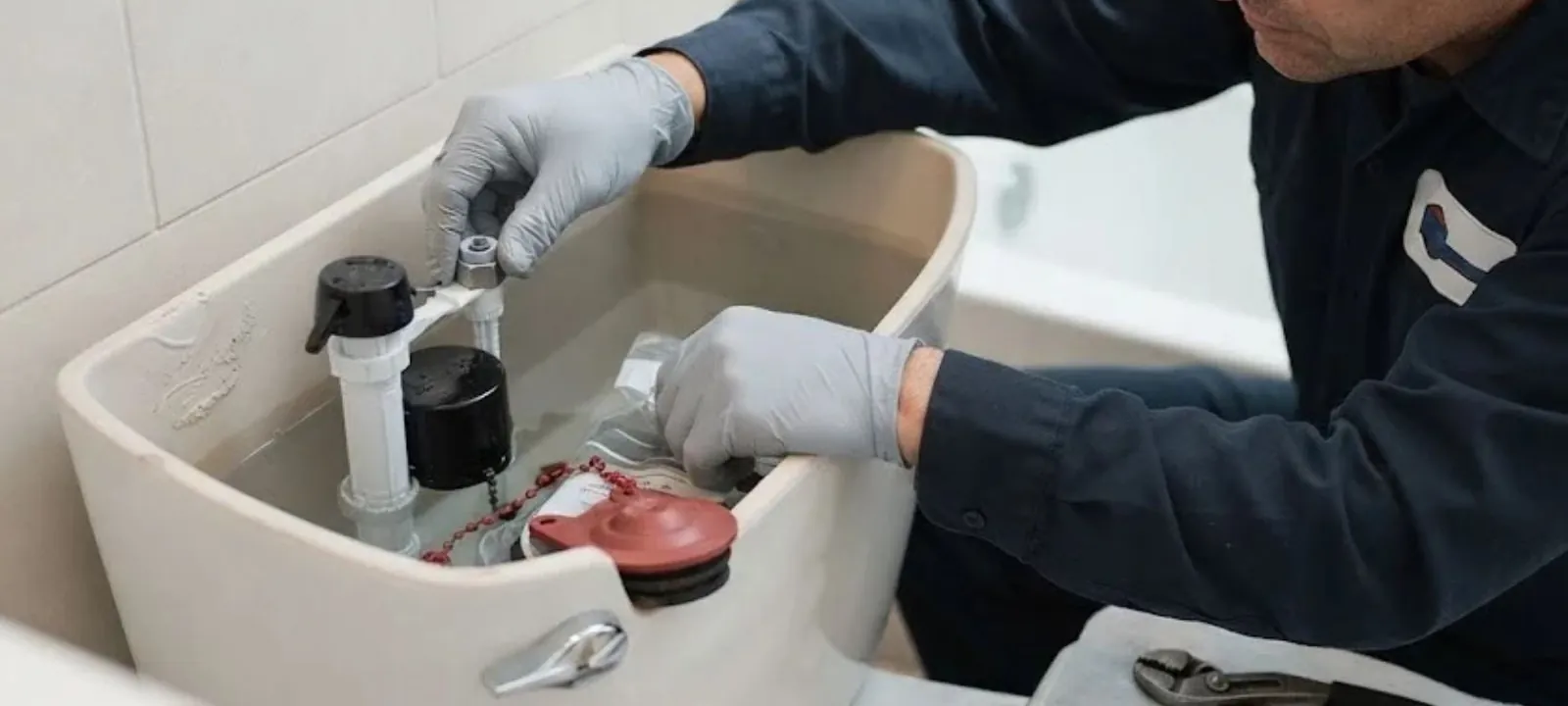
A dye test uses color to show where water is going when you cannot see it. In plumbing it is most useful for toilets, where a worn flapper lets tank water slip into the bowl without a sound. This post covers the toilet test first, then the UV version for drain, overflow and shower-pan leaks.
What dye can find and what it misses
Dye works where water sits still or flows slowly and you can watch the other side. A toilet tank and bowl, a tub overflow, a shower pan, and a drain trap all fit that description. You add color on one side and look for it on the other.
It does not work on pressurized supply lines. A pinhole in a copper pipe inside a wall or under a slab sprays out under pressure, and no dye you pour into a fixture will ever reach it. For those, a plumber can use the water meter, acoustic listening gear and thermal imaging, which is what leak detection is for.
Food coloring, dye tablets, or UV dye
| Dye type | Best for | Limits |
|---|---|---|
| Food coloring | Toilet tank leak test | Stains porous surfaces and is hard to see in dark water |
| Dye tablets made for toilets | Toilet tank leak test | Follow the label for how long to wait before reading |
| UV dye with a black light | Tracing drain, overflow, and shower-pan leaks | Needs a dark room and a UV light. Wear UV-blocking glasses. |
Food coloring works fine for toilets. Pick a dark color like blue or red, since pale yellow is hard to spot. Dye tablets made for toilets do the same job, so follow the package for the wait time.
UV dye glows under a black light. That lets you follow dyed drain or overflow water to the spot where it shows up, such as a ceiling stain below a bathroom. Most UV leak tracers use a fluorescent dye, so look for one labeled for plumbing or potable-safe use. Dye made for car fluids does not belong in a home water system.
The toilet test, step by step
Prep the tank
Take the lid off the tank, flush once, and let the tank refill. Remove any in-tank cleaner tablets first, since they color the water and spoil the result. Do not flush again until the test ends.
Add color to the tank
Drop in ten or so drops of food coloring or one dye tablet. Do not stir, and set the lid back.
Wait without flushing
Leave it alone for 20 to 30 minutes. Do not use that toilet during the wait, and warn the household.
Look in the bowl
Check the water in the bowl, not the tank. Any color that has reached the bowl means water has been slipping past the flapper.
Flush to clear it
Flush a few times so the dye does not stain the porcelain, and wipe up any spill.
Reading the result
| Result | Likely meaning | What to do |
|---|---|---|
| Color in the bowl within half an hour | Flapper or flush valve seat is leaking | Replace the flapper, or have a plumber check the seat |
| No color after 30 minutes | No sign of a flapper leak yet. Check the fill valve and overflow tube too | Look at the water level against the overflow tube |
| No color after 30 minutes but the toilet still refills on its own | A very slow flapper leak or a fill valve problem | Leave the dye in overnight without flushing, then check the bowl |
| Water running into the overflow tube | Fill valve is set too high or not shutting off | Adjust or replace the fill valve |
| Dry bowl but water pooling around the base | Base seal or supply connection | Check the wax ring and supply line, and call if wet persists |
A tank that refills itself every few minutes, or a toilet that hisses or runs briefly with nobody near it, often has this problem. The dye test confirms what you suspect.
Toilet silent but the bill is high? Turn off every fixture, then check whether the meter's low-flow dial still moves. If it does, dye the toilet first, since it is the usual cause.
Using UV dye and a black light
For a leak that is not a toilet, UV dye lets you follow the water. If a ceiling below a bathroom is damp, add UV dye to the tub or shower, run the water for a few minutes, then turn off the lights and sweep the ceiling or crawlspace with a black light. Glowing water points to that fixture as the source.
Test one fixture at a time. Dye the tub overflow, then the drain, then the shower pan, and wait between each so you can tell which one produced the glow. Wear UV-blocking glasses, since UV light can hurt eyes, and never shine it at anyone.
A plumber can run the same trace faster, because tracing several fixtures in order is easier with practice and the right tools. Many leaks inside a wall still need a camera or moisture scan after the dye narrows the area. Repairs to fixtures fall under the plumbing code, and the Alabama Plumbers and Gas Fitters Examining Board rule 720-X-1-.02 names the 2021 International Residential Code for residential work, so check the board for the current edition.
When it is time to call
Call if the dye shows a leak and a new flapper does not fix it, if the toilet base is wet, or if the bowl never fills right. Call too if you suspect a supply or drain leak and your tests keep pointing at a wall or the ceiling.
If water is on the floor near outlets or appliances, shut the toilet's supply valve (the oval or round handle low on the wall) and keep power tools and cords out of the wet area. If you cannot reach the breaker from dry footing, call the 24/7 line.
A toilet that rocks, cracks, or leaks at the base needs a plumber, because the wax seal and the flange sit below the bowl. Our toilet repair page lists what gets replaced and why. If you also suspect a pipe leak, call to book a plumber and ask about same-day appointments when available.
Homes in Alabaster and Helena have the same toilets and the same flappers, so this test applies there too. The Alabaster page and the Helena page explain how the dispatch line handles those towns.
Toilet leaks and the Pelham leak adjustment policy
Pelham Water Works has a leak adjustment policy for high bills, and it lists leaking toilets and dripping faucets among the exclusions. In plain terms, a silent toilet leak found with a dye test is not the kind of leak the city adjusts, so do not wait for a credit. Fix the flapper as soon as the dye shows color.
If a different, hidden leak did run up your bill, the policy asks for a Leak Adjustment Form and at least one proof of repair (the plumber's invoice, receipts for materials, or photos) within 60 days after the repair. The policy is meant for hidden leaks that ran usage well above your normal, so check eligibility with Pelham Water Works at (205) 620-6420 before you count on it. This is policy at time of writing, so confirm current terms.
Source: City of Pelham leak adjustment policy page.
Dye test questions
Allow 20 to 30 minutes with no flushing. A fast leak shows in a few minutes, but a slow one needs the full half hour or longer.
Check the bowl water, not the tank, since the tank will stay colored.
Not when you flush it away after the test. Leave it in the tank for hours and it can stain older porcelain or rubber parts.
Flush a few times after the test and it clears.
Only when the leak is a drain or overflow where water flows freely, and only if the dye path reaches the leak.
Pressurized supply leaks need a meter test, listening gear, or thermal imaging.
Only products labeled safe for potable plumbing should go anywhere near drinking water. Do not use automotive dye in household plumbing.
If you are not sure, ask a plumber to do the trace.
Check the water level against the overflow tube and the fill valve. A fill valve that stays open will run without leaking into the bowl.
A cracked tank or a bad supply line also causes puzzling symptoms.
The city's policy at time of writing excludes leaking toilets and dripping faucets from leak adjustments.
Confirm current terms with Pelham Water Works, and fix the toilet promptly either way.