
Water on a basement or lower-level floor has three possible sources, and only one of them is a plumbing problem. Pipes leak, groundwater pushes through walls and floors, and humid air condenses on cold surfaces. The repairs for each are completely different, so the first job is figuring out which one you have.
Before you step into a wet basement
Water and electricity do not mix
If there is standing water, do not step into it where outlets, extension cords, the electrical panel, a sump pump, or a water heater are in or near the water. Switch off power at the breaker only if the panel is dry and you can reach it without stepping in water. Otherwise stay out and call 911 or your electric utility if there is any shock risk.
- Never unplug or touch cords while standing in water.
- On a gas water heater that is wet, leave the gas control alone unless you can reach it dry. If you smell gas, leave the house and call your gas utility or 911 from outside.
- Call the 24/7 line for the plumbing once the area is safe.
Pipe, ground, or air
A plumbing leak runs whether or not it has rained. It tends to leave a wet spot near a pipe, a water heater, or a drain, and it often stains the ceiling or wall below a bathroom or kitchen. Water from a pressurized line also keeps showing up when nobody is using water.
Groundwater seepage follows the weather. The floor-wall joint gets wet a day or two after heavy rain, and the dampness fades as the soil dries. Condensation sits on cold pipes and cold masonry in humid months, beads up on the surface, and leaves everything damp and clammy without a clear drip point.
Run the meter test before anything else
The water meter is the fastest way to prove a pressurized leak. It reads every gallon that passes, including a slow one you cannot hear. Do the test during a dry spell so that rain does not muddy the result.
Stop all water use
Turn off faucets, the ice maker, the irrigation system, and the dishwasher, and make sure nobody flushes.
Read the meter
Lift the meter lid with a tool, not your fingers, since insects or snakes can sit under it, and note the numbers. Do not turn the utility's own valve. Look for the small low-flow dial or triangle, which spins at even the slowest flow.
Wait 20 to 30 minutes
Use no water at all, then read the meter again. A moving dial or changed numbers mean water is leaking somewhere.
Close the house main valve
Shut the valve where the line enters the house and check the meter once more. If it still moves, the leak is outside, between the meter and the house. If it stops, the leak is inside.
A moving meter does not tell you where the leak is, only that one exists. A running toilet flapper can also move the meter, so listen to the toilets before you rule out the wall pipes. If you want the number confirmed or the spot located, the water meter leak detection service starts with the same reading and goes further.
Paper, tape, and foil checks
To see whether a patch of wall or floor is wet from inside or outside, tape a square of aluminum foil or plastic wrap tightly over it, sealing all four edges. Check it after a day. Moisture on the room side of the foil points to condensation. Moisture trapped on the wall side points to water moving through the masonry or leaking from behind.
A dry paper towel wrapped around a pipe joint also works. If the towel dampens evenly along the whole cold pipe in humid weather, suspect condensation. If it dampens only at the joint, the fitting is the likely leak.
Matching what you see to the likely cause
| What you notice | Most likely source | How to confirm |
|---|---|---|
| Wet spot appears a day or two after heavy rain | Groundwater seepage | Compare against the dates of recent rain and check gutters and grading |
| Water meter keeps moving with everything off | Pressurized supply leak | Close the house main and repeat the meter check |
| Beads of water on cold pipes in humid weather | Condensation | Foil test, then insulate pipes and run a dehumidifier |
| Stain under a bathroom or kitchen above | Drain or supply leak above | Moisture meter scan and a check of the fixture above |
| Wet floor near the water heater | Tank, relief valve, or fitting leak | If the heater is wet, switch off its power (electric) or set the gas control to off (gas) first, then check for fresh drips with your hands out of standing water |
| Dampness that dries out then returns | Seasonal seepage or a slow leak | Track the wet area and the meter for a week |
Several sources can overlap. A house can have a small drain leak and groundwater seepage at the same time, and the seepage hides the leak. Fix one, then retest. Dry wet materials quickly, since the EPA's home mold guidance says to dry them within about 24 to 48 hours. A wall, carpet or insulation that stays wet longer may grow mold and need removal.
Before you call, jot down when the wet spot appears, which wall or corner it is in, whether it follows rain, and the meter reading before and after the test. A photo of each helps. If the test shows a leak, leave the house main closed and call the 24/7 line. If a floor drain is backing up with sewage, keep out of the water and ask the dispatcher about a sewer line problem instead.
How leak detection pinpoints the source
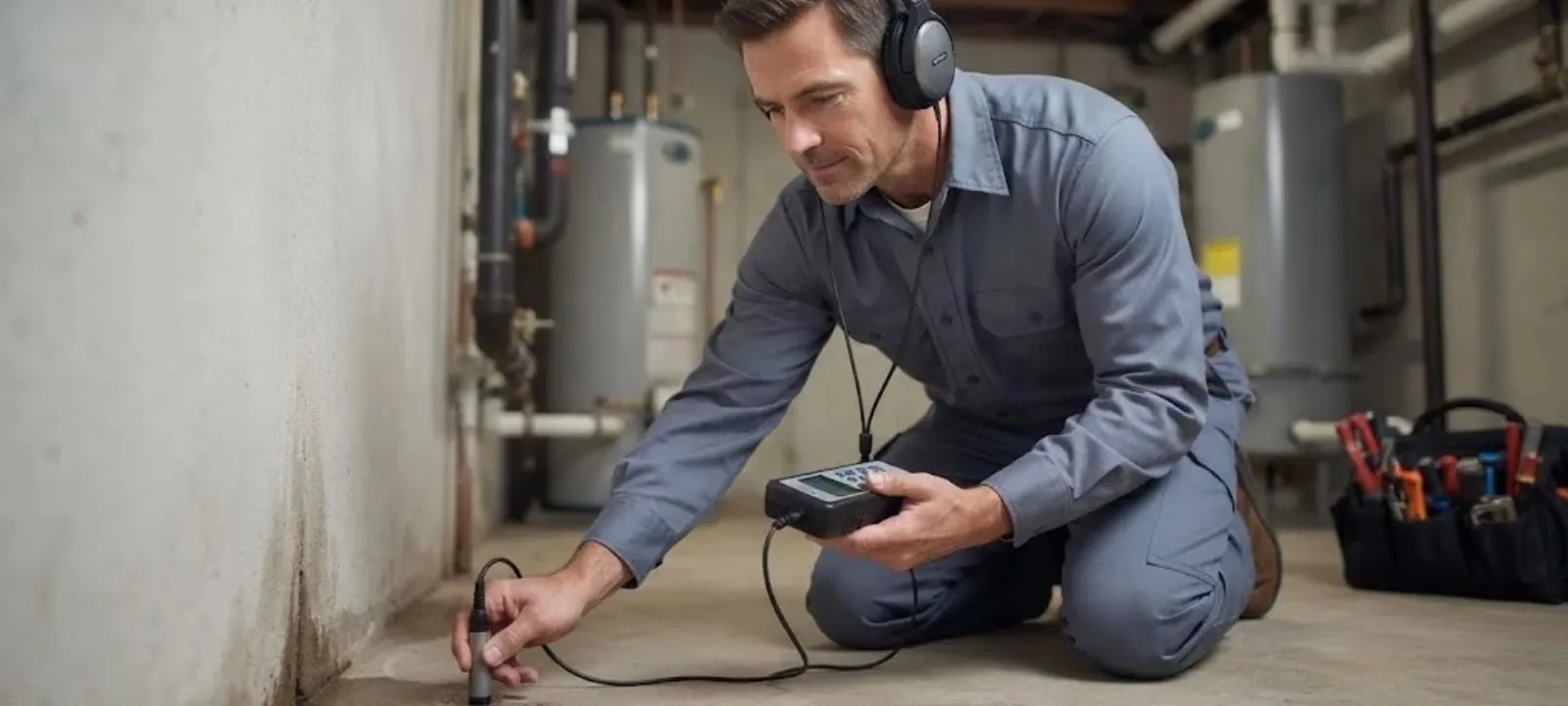
In general, a moisture meter reads how wet drywall, wood, and masonry are without cutting into them. A thermal camera shows temperature differences behind a surface, and a cool streak on a warm wall can trace a hidden supply line. Acoustic listening gear picks up the hiss that escaping water makes in a pressurized pipe, even through a slab.
A plumber can use methods like these to pinpoint a leak to a small area before opening the wall. That keeps the repair small and your drywall mostly intact. Our leak detection page explains how the methods combine for different kinds of leaks.
When the fix is not plumbing
If your testing points to seepage, a plumber is the wrong first call. Look at the gutters and downspouts, since a clogged gutter spills roof water beside the foundation. Check that the soil slopes away from the house and that downspouts discharge several feet from the wall.
A sump pit with a working pump handles water that collects below the floor. Test it by pouring in a bucket of water and watching it switch on and empty. If the pump struggles or the discharge pipe freezes shut or clogs, that is a plumbing and drainage repair worth calling about. Drainage contractors and waterproofing specialists handle exterior grading and wall sealing.
Basements in Alabaster and Helena call for the same checks, and we serve both towns as well as Pelham. Do the meter test before you call, because the result tells the plumber where to start.
Rain, limestone ground, and the water bill in Pelham
Heavy rain is the clearest way to tell seepage from plumbing. A floor that is wet only after storms and then dries is a drainage question first, so run the meter test in a dry week. The Shelby County Reporter described heavy flooding in April 2014, which is a reminder to check gutters and grading before a long rain.
Only if you see a bowl-shaped dip, a leaning tree, or a low spot that keeps growing near the foundation, treat it separately. Those are signs the Reporter listed for sinkholes. Keep people away and call the police, who alert Public Works.
If the meter test finds a hidden leak, save the plumber's invoice, material receipts, or repair photos. Pelham Water Works asks for a Leak Adjustment Form and at least one of those documents within 60 days after the repair. The adjustment generally requires use above 1.5 times your average from the three prior billing cycles, and leaking toilets are excluded. That is the policy at time of writing, so confirm current terms with Pelham Water Works.
Source: Shelby County Reporter, April 29, 2014, and the City of Pelham leak adjustment policy page.
Questions about wet basements
Watch the timing. A plumbing leak shows up regardless of rain, while groundwater seepage appears after storms and fades as the ground dries.
The meter test helps. A meter that keeps moving with every fixture off usually means water is leaking somewhere, including a toilet, ice maker or irrigation line, so check those before blaming a wall pipe.
Often yes. A plumber can use methods such as moisture readings, thermal imaging, and acoustic listening to narrow the spot before anyone opens the wall.
Cutting is still sometimes needed to repair the pipe, but the opening is much smaller.
No. Condensation is a humidity problem. Cold pipes and cold masonry collect moisture from warm air.
Insulating the pipes and running a dehumidifier usually solves it.
No. A pump that cycles constantly during dry weather may signal a high water table, a stuck float, or a leak feeding the pit.
Have a plumber check it, since a pump that never shuts off will wear out quickly.
A pressurized supply leak will. A drain leak will not, because drain water has already passed the meter.
That is why a dry meter does not rule out a leaking drain line.
It can under its leak adjustment policy, but the leak must not have been readily detectable, and fixtures like leaking toilets are excluded. Documentation is due within 60 days after the repair.
Confirm current terms with Pelham Water Works at (205) 620-6420 before you rely on the policy.